
Vine App is Back: Here’s What it Means for the Future of Content
If you’ve been anywhere near the internet this month, you’ll know that Vine, yes, that Vine, has officially crept back into the cultural spotlight. And almost instantly, everyone born between 1990 and 2002 had the same quiet, nostalgic reaction: a half-smile, a momentary pause, and the distant mental playback of “Hi, welcome to Chili’s.”
Nostalgia aside, Vine is back (kind of). And this reboot tells us about where content, creativity, and attention are heading next. Because beneath the memes and throwback energy, this is a nod to the potential future of content.
What’s actually happening with the Vine reboot?
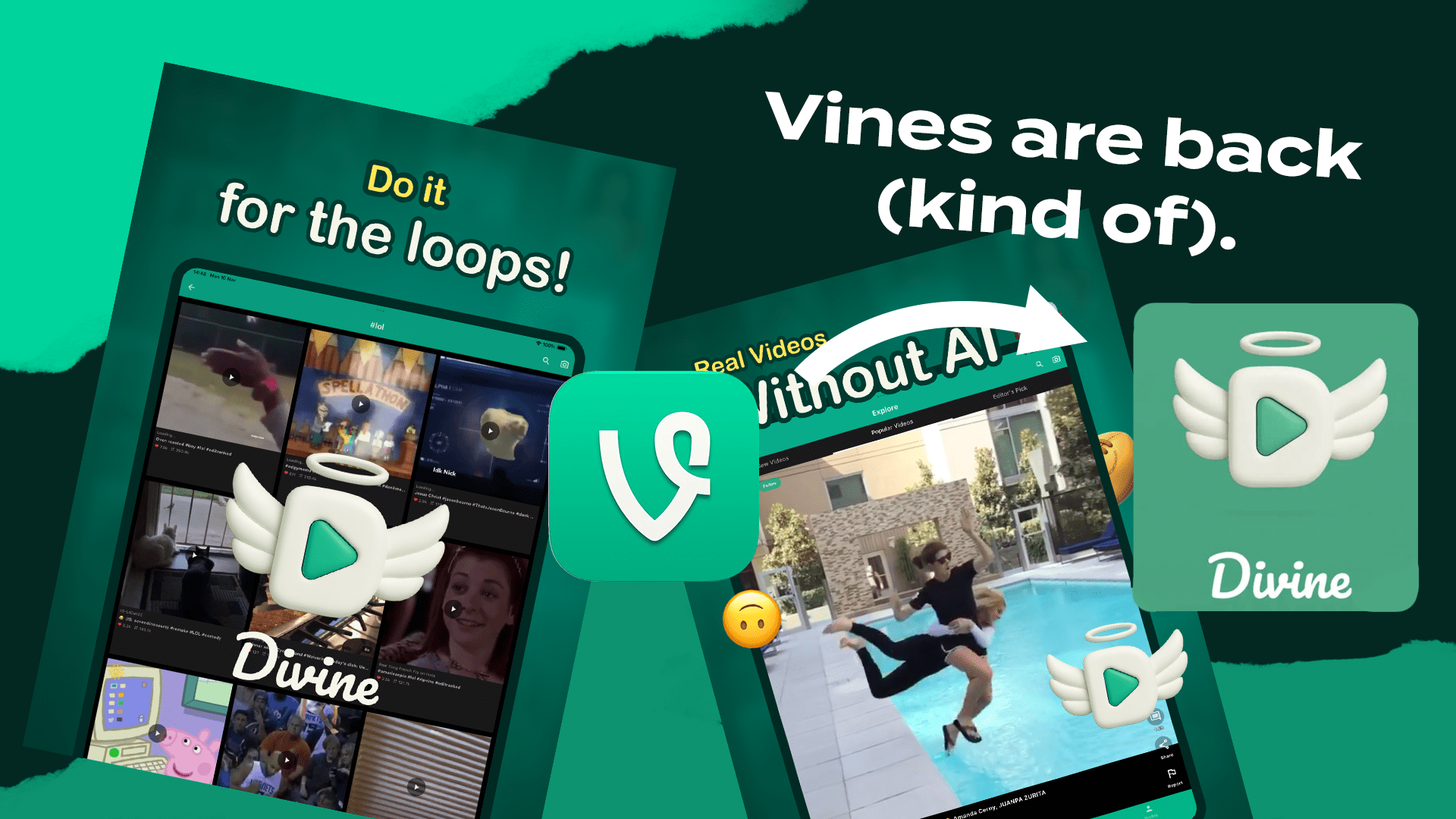
The reboot of Vine is called diVine, and it has launched in a beta phase. It isn’t a full public rollout, but the app is live, functioning, and quietly being explored by early users.
diVine is being built by Evan Henshaw-Plath, one of Twitter’s earliest engineers, with support from Jack Dorsey, who has openly said he regrets shutting Vine down in 2016. Instead of rebuilding it within a large corporate platform, they’ve created diVine on Nostr, a decentralised protocol focused on giving users more control over their content and identity.
Two things define this reboot straight away. The first is the return of the classic six-second looping video format, the creative constraint that made Vine so distinctive. The second is the restoration of the original Vine archive. The team has brought back tens of thousands of loops, allowing users to rediscover the clips that shaped early internet culture and short-form humour.
What makes diVine even more interesting is its stance on AI. While most social platforms are integrating generative tools as fast as they can, and calls for AI transparency are being ignored, diVine is going the other way. The app plans to flag or restrict AI-made clips to maintain the human-made, spontaneous, lived-experience quality that made Vine beloved in the first place.
Yep, that means potentially an AI-free platform.
So, for now: diVine is active, still in beta, and setting out its stall as a decentralised, human-first revival of short-form creativity. The nostalgia might get people in the door, but the positioning is what’s making people pay attention.
Why this reboot hits a cultural nerve
Vine’s return is happening in a very particular moment for digital culture. Feeds have become highly polished, heavily optimised, and increasingly shaped by generative tools. Transitions are smoother, edits are faster, and ideas often feel familiar, sometimes a little too familiar.
AI is being used to curate our feeds faster than ever before. And those feeds are increasingly overrun with AI-generated content. But do people like it?
Of course, the answer is contextual; however, there is a lot of evidence pointing to negative sentiment. A recent Kantar study showed that AI-generated ads tend to provoke more negative emotional reactions than those made by humans. Not to mention the swathes of people in comments sections calling AI out.
diVine’s launch has arrived at a moment when many people are craving human creativity. They’re looking to cleanse their feeds of AI slop and seek originality, imperfection, and the kind of personality that can only come from humans.
Vine used to be that platform. And until the rise of TikTok, it reigned supreme as the place for authentic interactions and online cultural moments. It originally thrived because its constraint created a playground for ingenuity. In a landscape now overflowing with automation, that constraint feels refreshing again.
What this means for marketers: a shift in creativity, attention, and expectation
Most brands don’t need to start posting six-second videos tomorrow, but the cultural signals behind diVine matter. They point toward a shift in what audiences respond to and potentially what they’re tired of.
Human-made content: is it becoming the premium category
As AI accelerates content production, the question stands - will human-made work gain value by contrast? We’ve seen this pattern in food, fashion, craft, and design. When mass-produced becomes standard, handmade becomes desirable. Could we now be seeing this dynamic play out in content?
diVine is one of the first platforms to articulate that shift: human-made content isn’t just nostalgic, it’s becoming distinctive.
Lived experience is a creative edge
AI can create content, but it cannot replicate lived experience, emotional intelligence, or cultural nuance with the same level of depth. The work that resonates most tends to come from a perspective of someone who has actually lived the thing they’re expressing.
Brands that can balance AI for efficiency with human-led storytelling for substance will move ahead fastest.
Short-form storytelling is being reset
Vine always proved that creativity doesn’t require time; it requires simplicity. The six-second limit forces ideas to stand on their own. No elaborate editing, no exposition, just the core idea, delivered cleanly.
That’s something many brands have drifted away from. diVine’s return offers a reminder that constraints can sharpen creativity, not limit it.
Nostalgia isn’t a strategy, but it is a signal
Brands shouldn’t chase diVine simply because it’s trending. But they should pay attention to what its early traction says about consumer behaviour: people want content that feels human. Work that feels lived rather than generated. Stories that carry emotional truth rather than algorithmic polish.
That insight, not the platform, is what matters strategically.
Where this leaves us: the unexpected value of being human
Every major technological shift creates its own counterculture. As AI accelerates content production, we’re seeing a quiet but powerful appetite emerge for work that feels grounded, personal, and emotionally honest. The more synthetic content becomes, the more people seem to crave the opposite: texture, perspective, and authenticity.
We may be entering a phase where “human-made” becomes a creative differentiator. Where provenance matters. Where originality feels refreshing again, not because AI is inherently negative, but because humans connect most deeply with stories that carry lived experience.
diVine might be a small app in beta, but it captures a much larger truth: people still want content they can feel. That’s not going anywhere.
If you want insights like this in your inbox, and a grounded view of how creativity is evolving, join the newsletter below. The next shift in attention is already unfolding, and it’s worth watching closely.


Go on… steal all of our brilliant ideas


Go on… steal all of our brilliant ideas
Fancy some emails you’ll actually want to read? Sign up for our newsletter and we’ll slide into your inbox with insights on how you can make your brand hotter than Dante's inferno.