
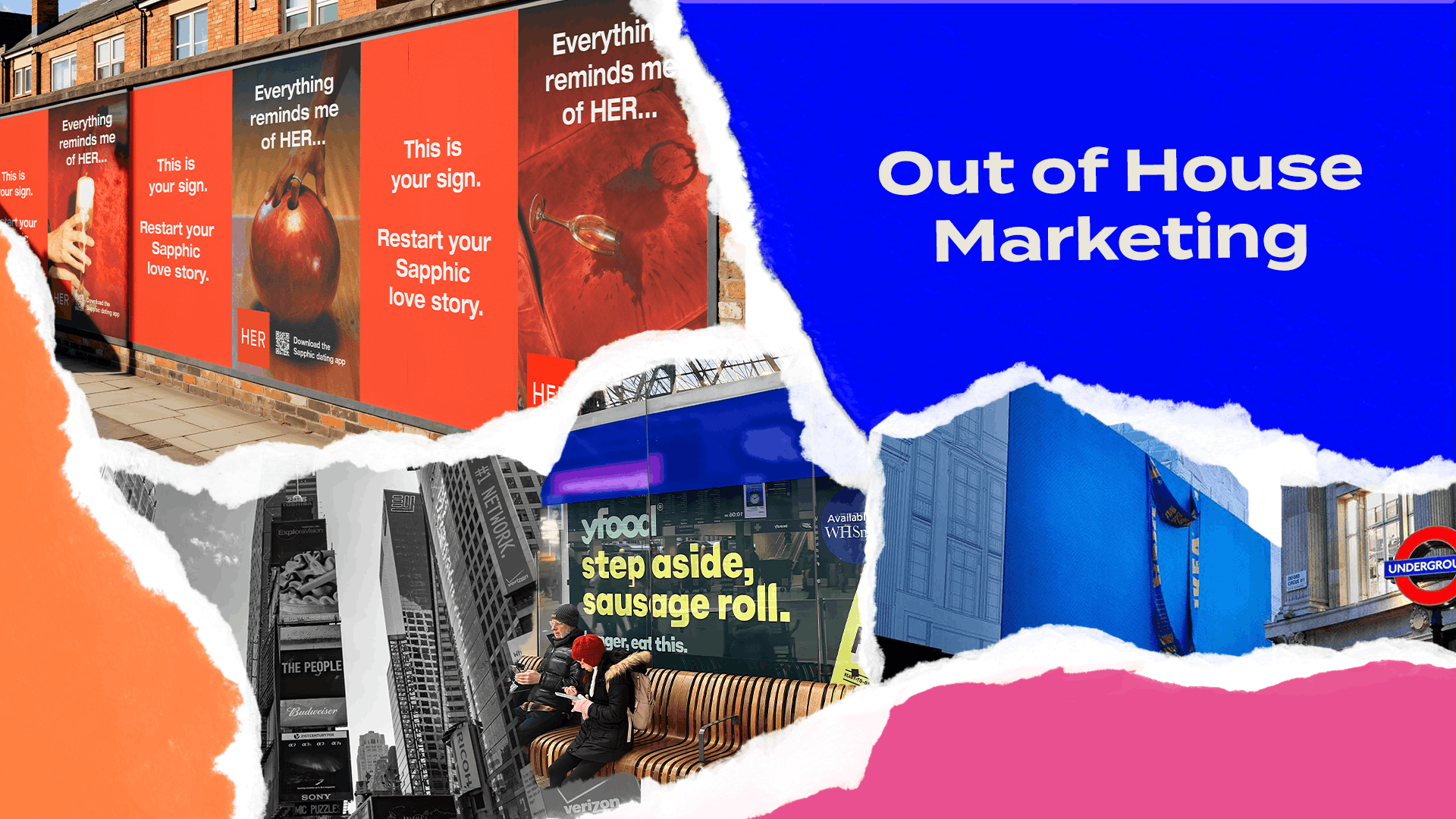
7 Out of Home Marketing Examples to Inspire Your Next Campaign (2026)
Out-of-home advertising is having a real moment.
In a world where we scroll past ads without thinking, there is something powerful about seeing a message in the real world. On a billboard. In a train station. On a bus stop. On large digital screens that quite literally stop you in your tracks.
OOH advertising is about presence. Cultural timing. Shared experience. And making people go “hold on a sec…”
From traditional OOH advertising to digital OOH and programmatic DOOH powered by real-time data, the industry has evolved quickly. Brands are rediscovering the ability of outdoor advertising to reach people at scale, outside their homes, in places where attention is harder to ignore.
As foot traffic increases across major cities like London and New York City, the smartest brands are asking a simple question: how do we use the physical world to create something people actually care about?
Here are seven out of home marketing examples from 2025 and 2026 that answer that question well.
What is out of home marketing?
Out-of-home marketing, sometimes called out-of-home advertising or OOH advertising, refers to any form of advertising that reaches people outside their homes. It covers everything from traditional OOH advertising formats like static billboards to digital OOH ads delivered via digital billboards, digital displays and large screens across city streets.
Types of OOH advertising include billboard placements, street furniture, bus stops, train stations, public transport like the London Underground, grocery store digital screens and large-format transit takeovers. Increasingly, brands are also investing in DOOH advertising, which allows ads to run programmatically using real-time data, weather data and audience triggers.
Traditional DOOH advertising typically involved manually purchasing ad space on digital screens that ran on fixed schedules. Today, programmatic DOOH gives brands more flexibility, allowing OOH campaigns to adapt to the digital world while still living in the physical world. QR codes, social media integration and dynamic creative mean that OOH advertisements can now travel far beyond their original placement.
The industry has experienced rapid growth because of this evolution. In a fragmented media landscape, outdoor advertising offers high reach, shared visibility and the ability to create immersive experiences in the real world. That combination is powerful.
With that context in mind, let’s take a closer look at seven standout out of home marketing examples shaping 2026.
1. Spotify wrapped: Turning data into a shared moment
The campaign
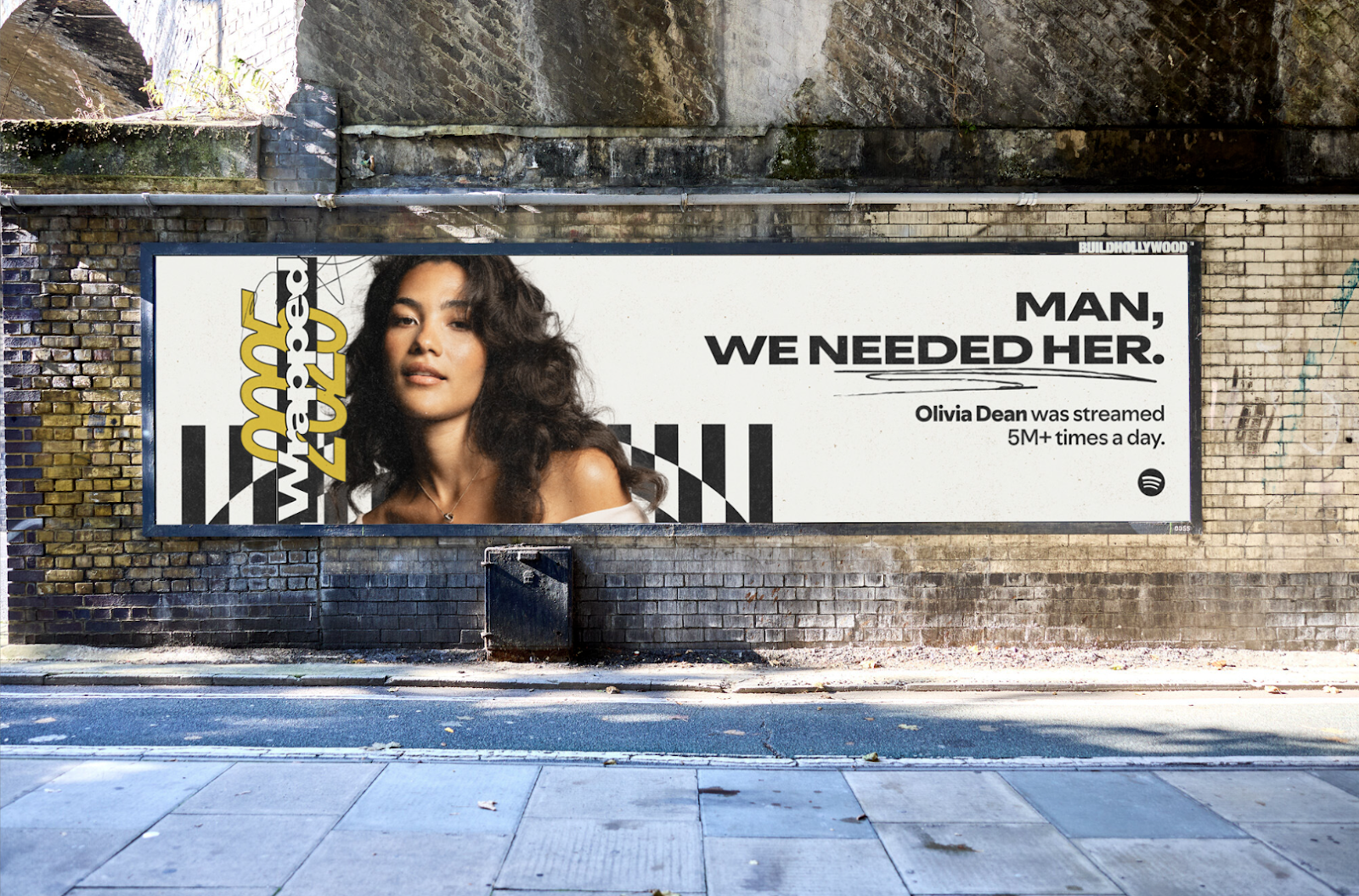
Spotify extended its annual Wrapped campaign into OOH advertising across the UK and US, transforming user data into bold, large-scale outdoor advertising. Using digital billboards, D billboards and digital screens in high-foot-traffic areas, Spotify displayed hyper-local insights about listening habits in specific cities.
The ads referenced real behaviours from the previous year, from genre spikes to mood trends influenced by weather data. It felt specific without being intrusive, playful without being gimmicky.
Why it worked
Spotify understood that Wrapped was already a cultural ritual. Users expect it. They share it. It dominates social media every year. By bringing it into the physical world through digital OOH advertising, Spotify turned individual data into collective conversation.
The campaign worked because it aligned with behaviour that already existed. It also demonstrated a great use of real-time data and localisation, reinforcing Spotify’s ability to understand its users without crossing the line into surveillance marketing.
Importantly, the OOH ads were built to be photographed and shared. The digital billboard advertising examples became content in their own right, extending brand awareness far beyond the initial ad space.
What this means for your brand
If you are planning an OOH advertising campaign, start by identifying behaviour your audience already owns. The best OOH campaigns do not create relevance from scratch; they amplify something real.
Consider whether real-time data or contextual triggers could strengthen your message. You could even let your customers do the hard work for you. Featuring a head turning review or a customer quote can be a bold statement in itself. When outdoor advertising reflects lived behaviour, it feels less like advertising and more like cultural commentary.
2. Netflix 3D digital billboards: Entertainment as advertising
The campaign
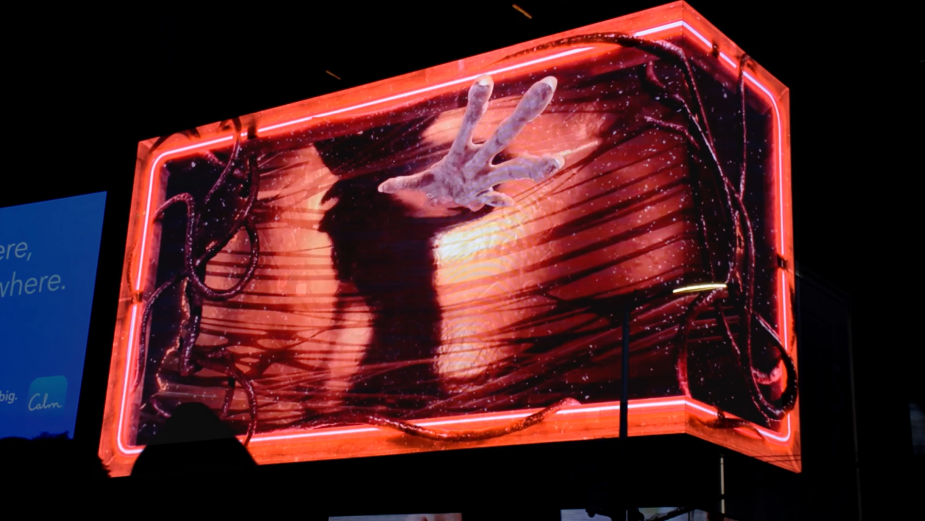
Netflix invested in immersive 3D billboard executions in New York City and London, turning traditional billboards into dimensional digital displays. Characters appeared to step beyond the frame, interacting with the space around them. The installations felt more like live experiences than standard advertisements.
These DOOH ads dominated high-traffic city streets and leveraged large-format digital screens to create scale and impact.
Why it worked
In a competitive advertising industry, spectacle alone is not enough. What made this a great example of OOH advertising was alignment. Netflix sells entertainment, so its outdoor advertising felt entertaining.
The use of 3D technology created a pause in busy environments where people are constantly distracted. That pause translates into attention, and attention drives brand awareness. The installations also travelled across social media, proving that digital OOH and online amplification are now intertwined.
This campaign demonstrated that high reach combined with immersive experiences can generate both physical and digital engagement.
What this means for your brand
When investing in digital OOH advertising, ensure the format matches the strength of your idea. Large screens and large-scale placements amplify both good and mediocre creative. The ability to stand out depends on conceptual clarity, not just technical execution.
Ask whether your advertisement would still feel compelling if someone filmed it and posted it online. OOH campaigns increasingly live in two places at once.
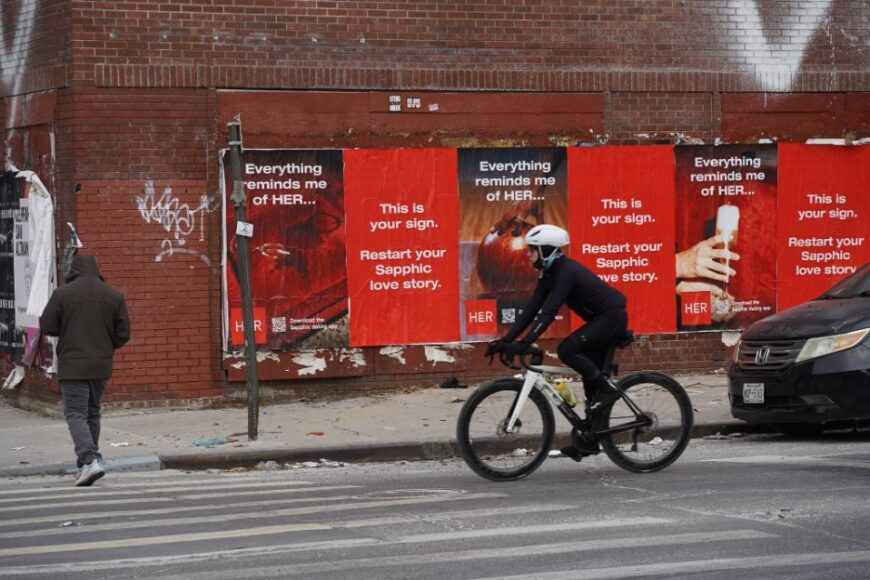
3. HER’s LA and New York campaign
The campaign
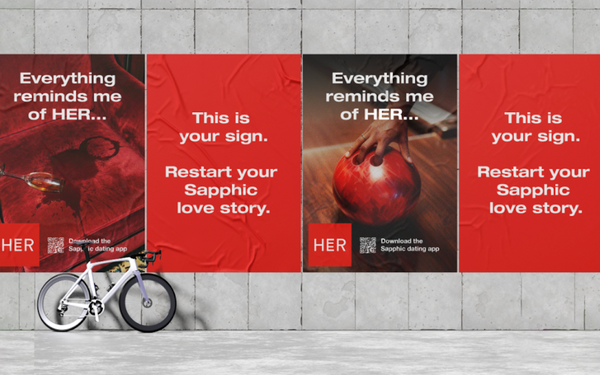
HER launched a bold out-of-home advertising campaign across Los Angeles and New York City, targeting sapphic audiences with messaging rooted in genuine cultural understanding. Large-format billboards across major neighbourhoods spoke directly to the community in language that felt specific and unfiltered.
The objective was brand awareness. The result was significant. A video of the campaign went viral, reaching nearly one million views, with comments such as “this kind of marketing works on me” and “give the marketing team a raise.”
Why it worked
The campaign worked because it was co-created with the community it represented. It did not rely on broad assumptions about gender or surface-level inclusivity. Instead, it reflected real nuance and lived experience.
In OOH advertising, visibility is unavoidable. If brands misjudge tone, it is highly public. But when they get it right, the impact is immediate and affirming. This campaign resonated because it felt authentic rather than performative.
What this means for your brand
If your marketing strategy involves speaking to a specific community, involve that community in the creative process. Collaboration strengthens insight and reduces risk.
Out-of-home marketing magnifies authenticity. Work with the people you want to reach. Co-create messaging. Test language. The physical world does not forgive lazy targeting.
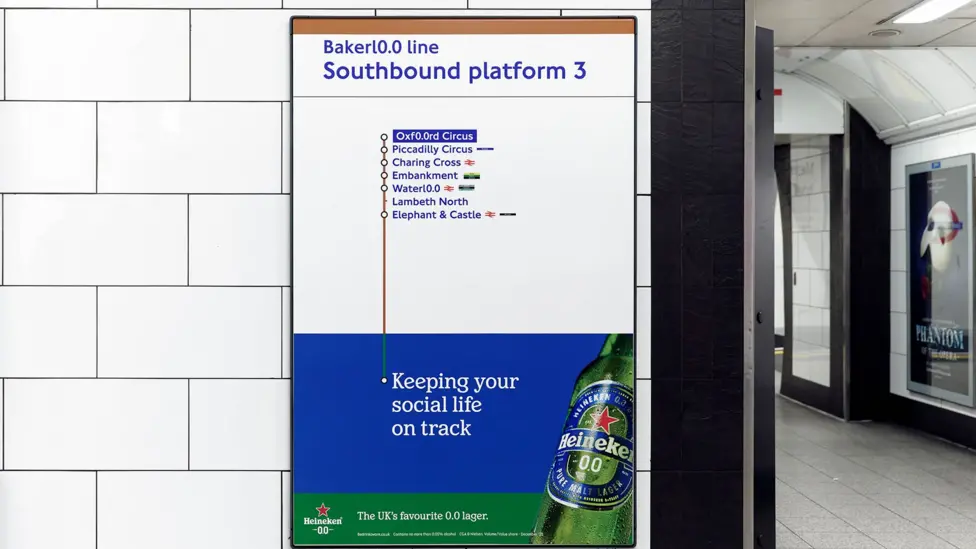
4. Heineken’s Bakerloo line takeover
The campaign
This one is controversial. Heineken activated a large-scale OOH advertising campaign across the Bakerloo Line on the London Underground. From train stations to carriage interiors and digital displays, the brand embedded itself into commuters’ daily routines.
The campaign used a mix of billboards, digital screens and transit placements to create consistent visibility across multiple touchpoints.
Why it worked
Mistakes get noticed. If something is spelt wrong our eyes are drawn to it. They leaned into this massively. Transit advertising offers repeated exposure and predictable foot traffic. Commuters see the same ads regularly, reinforcing brand awareness over time. What made this campaign effective was contextual fit. By putting something different in such a familiar place to so many London commuters, you’re going to turn heads.
Plus the integration across multiple formats, including traditional OOH advertising and digital OOH, ensured cohesive messaging.
What this means for your brand
When selecting ad space, think beyond scale. Consider routine, repetition and emotional context. Train stations and bus stops are not just locations; they are environments with specific mindsets attached. Play into that.
Strategic placement multiplies effectiveness. The best way to use OOH advertising is to align message, environment and audience behaviour.
Purposeful disruption to every day things can work. But beware - this campaign was flagged for potential issues with accessibility with travel, especially for disabled people. So this is an important lesson. Risks can pay off but ensure you have the right consultants and people around you to ensure you are making the right risky decision. Not just a risky decision for the sake of it.
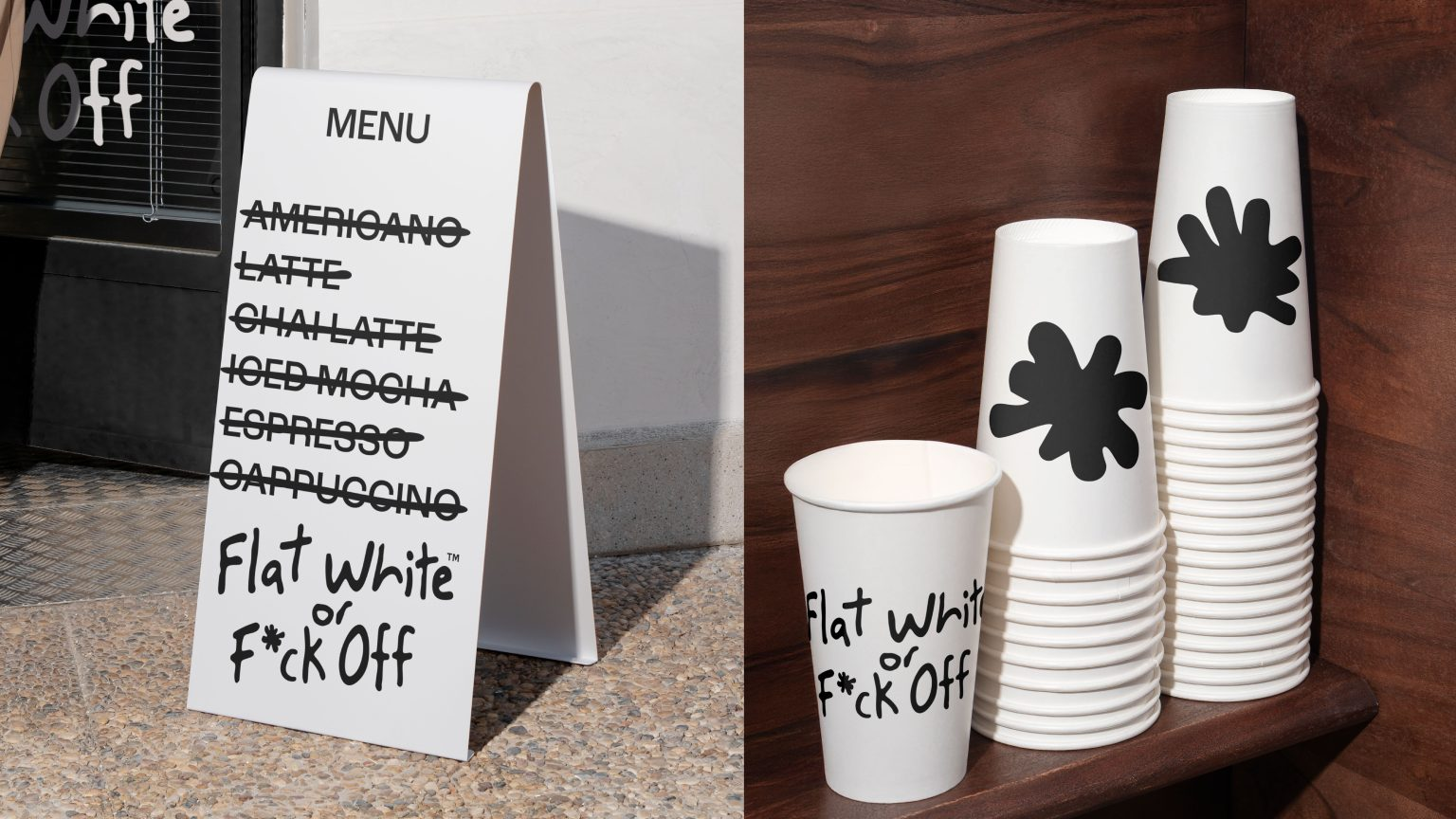
5. Flat white or F*ck off: zero compromise
The campaign
Flat White or F*ck Off was a one-day experiential coffee pop-up at Outernet in central London, just outside Tottenham Court Road station, and its simplicity was the entire point.
There was no menu to scan and no customisation to consider. No oat milk, no almond, no syrups, no endless variations. Just one option: a well-made flat white. Take it or leave it.
The concept was inspired by Rory Sutherland’s commentary on modern choice overload and the strange paradox of abundance. We are constantly invited to personalise everything, from our coffee orders to our digital feeds. More options are framed as better service. More flexibility is positioned as progress. This activation gently challenged that logic by doing the opposite. It reduced everything down to one confident offer and turned that reduction into a cultural statement.
Set in a high-foot-traffic location and amplified through social media, it became more than a pop-up. It became a conversation about simplicity, quality and whether endless choice is actually what people want.
Why it worked
It worked because it tapped into a shared, often unspoken frustration: decision fatigue.
In a world saturated with options, there is something unexpectedly appealing about clarity. By removing choice entirely, the activation felt bold rather than restrictive. It signalled confidence. It suggested that sometimes the strongest brand position is not expansion, but focus.
Its placement in a busy central London environment amplified that effect. Surrounded by competing ads, menus and messaging, the singularity of the offer cut through. The physical experience, combined with the cultural commentary behind it, gave it substance beyond a simple stunt.
What this means for your brand
There is a strategic lesson here about conviction.
Not every OOH campaign needs layers of complexity. Not every brand needs multiple variations of the same idea. Sometimes what resonates most strongly is a clear point of view, expressed confidently in the real world.
If you are considering an experiential activation as part of your out-of-home marketing strategy, think about the cultural tension you are responding to. Where is there noise? Where is there excess? And what would it look like to simplify instead of add?
In a market defined by more, there is real power in offering less, especially when that “less” feels intentional and considered.
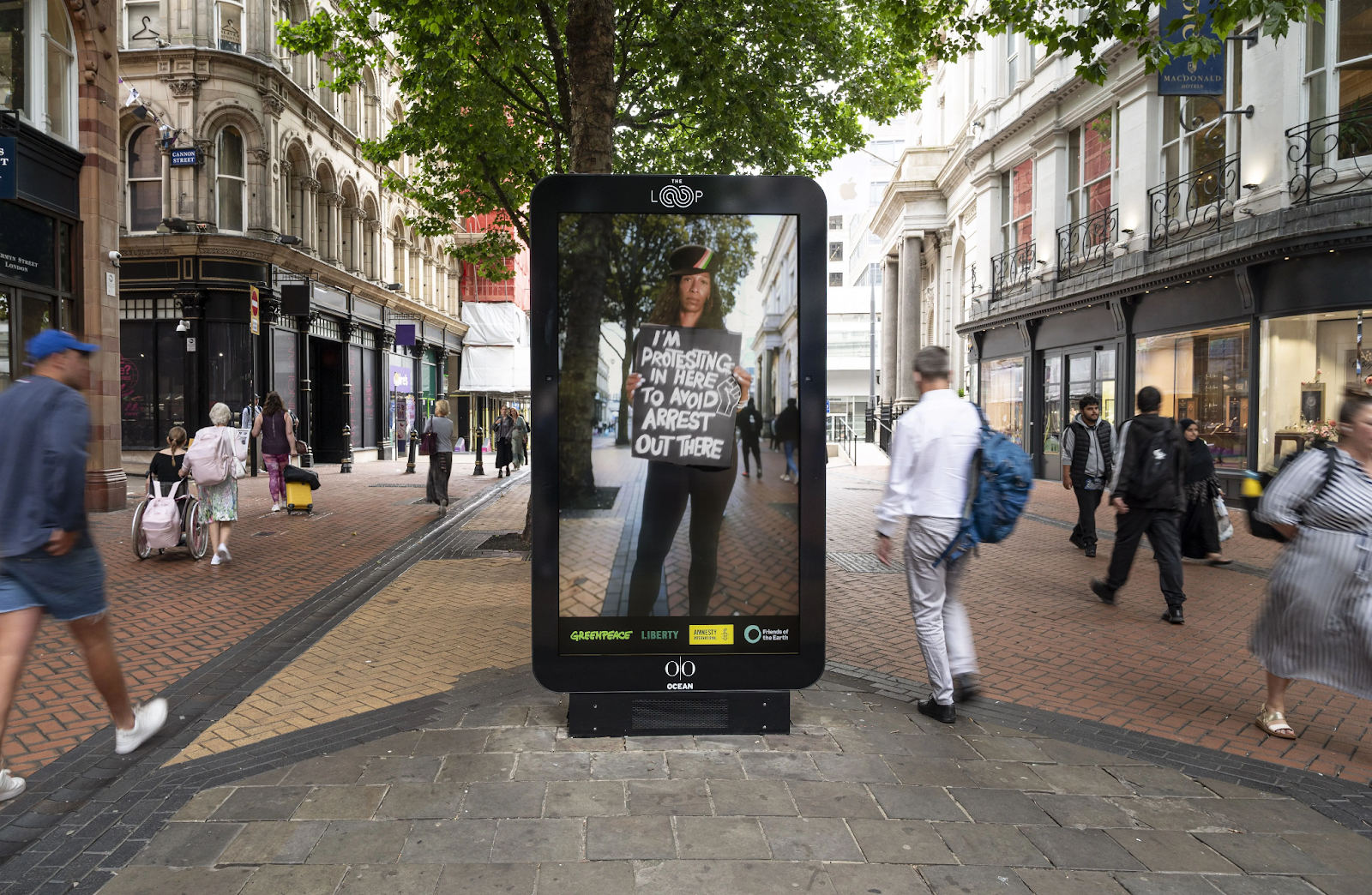
6. Greenpeace’s silent DOOH protest
The campaign
Greenpeace staged a silent protest inside digital OOH screens, interrupting the expected rhythm of DOOH ads with still, striking visuals. In environments dominated by motion-heavy digital displays, the absence of movement became the focal point.
Why it worked
Contrast creates attention. In a landscape where many DOOH advertising campaigns rely on animation and volume, restraint can be powerful.
The campaign aligned format with message. The simplicity reinforced the seriousness of the cause, demonstrating that OOH advertisements do not always need spectacle to generate impact.
What this means for your brand
Before launching DOOH advertising, study the environment carefully. What do other brands look like on those screens? What visual language dominates?
Sometimes the most strategic decision is to do less. When everyone is competing for volume, subtlety can stand out.
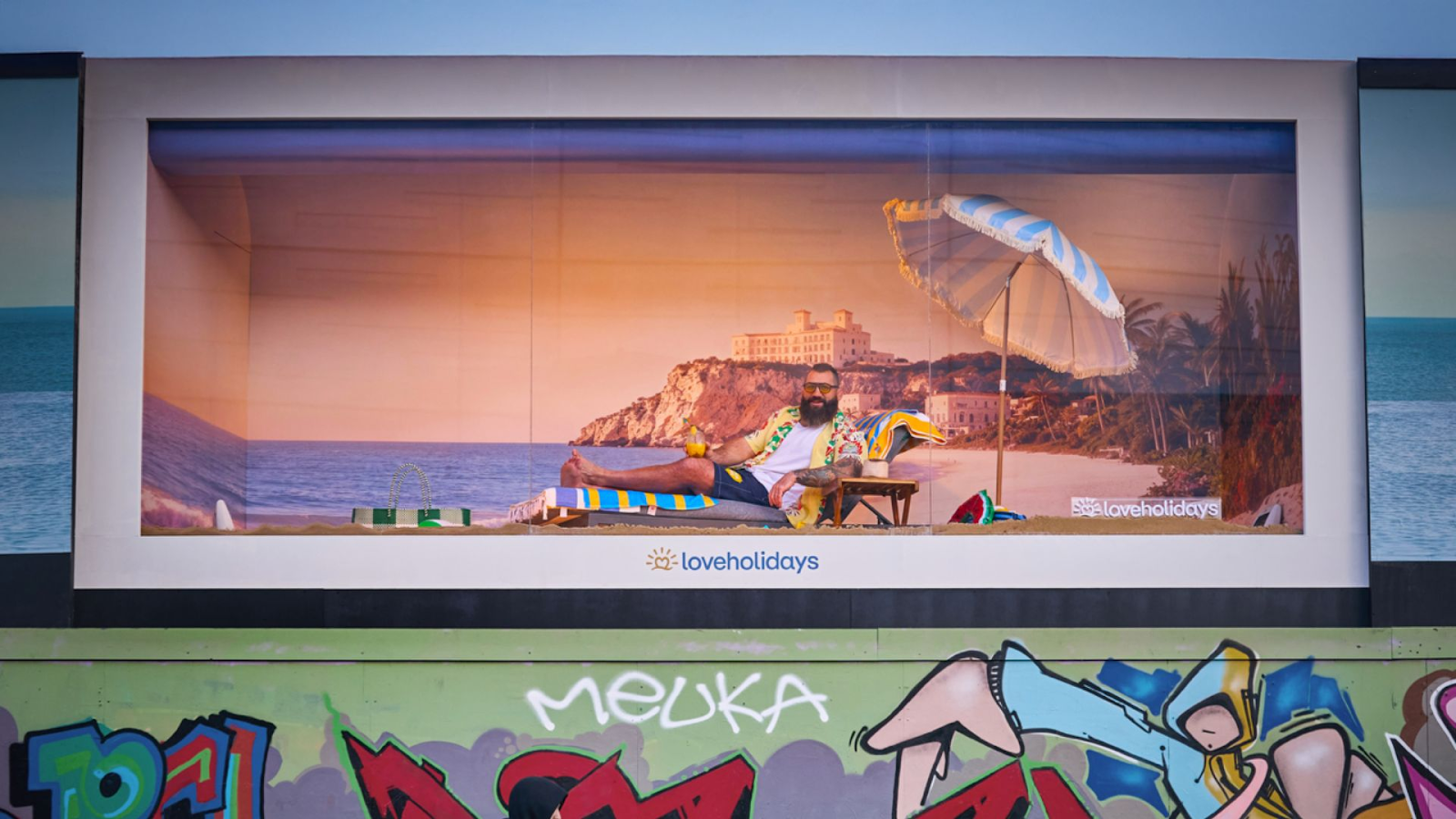
7. Love holidays x Joe Marler living billboard
The campaign
Love Holidays partnered with Joe Marler to create a giant 3D billboard installation in Shoreditch. The execution pushed beyond traditional shapes, transforming a standard advertisement into a large-scale spectacle.
The D billboard format created depth and physical presence, ensuring the campaign dominated its surroundings.
Why it worked
Celebrity alone does not guarantee effectiveness. What made this OOH advertising campaign work was the combination of recognisability and innovative format. The creative made the most of the large screens and physical space available.
It also travelled well online, demonstrating how digital world amplification can extend the life of outdoor advertising.
What this means for your brand
If you are investing in celebrity partnerships or large-format placements, ensure the idea is strong enough to justify the scale.
OOH campaigns succeed when format enhances message. Use the physical world strategically rather than simply occupying space.
Why out-of-home advertising continues to grow
The out-of-home industry continues to evolve rapidly. From grocery store digital screens to bus stops, from train stations to immersive installations, brands are exploring new ways to integrate OOH advertising into broader marketing strategies.
Programmatic DOOH, real-time optimisation and weather data triggers have increased flexibility. QR codes bridge offline and online engagement. Even creative agency Elvis and other industry leaders have highlighted how OOH advertising is experiencing renewed rapid growth due to its ability to deliver high reach in a fragmented media landscape.
In a world dominated by digital feeds, the physical world offers something rare: shared visibility. People encounter OOH advertisements together, in the same space, at the same time. That shared experience reinforces memory and impact.
Planning your next campaign
Whether you are exploring traditional OOH advertising, digital OOH, programmatic DOOH ads, large-format billboards, immersive experiences or transit placements in major cities, the principle remains the same.
Start with insight. Define your target audience clearly. Understand the environment in which your advertisement will appear. Align your message with context and behaviour.
The best out of home marketing examples are not successful because they are simply large-scale. They succeed because they are strategically grounded, culturally aware and creatively confident.
If you are ready to build an OOH advertising campaign that drives genuine brand awareness and delivers real-world impact, talk to us about your next campaign.
Let’s create something people stop for.


Go on… steal all of our brilliant ideas


Go on… steal all of our brilliant ideas
Fancy some emails you’ll actually want to read? Sign up for our newsletter and we’ll slide into your inbox with insights on how you can make your brand hotter than Dante's inferno.