
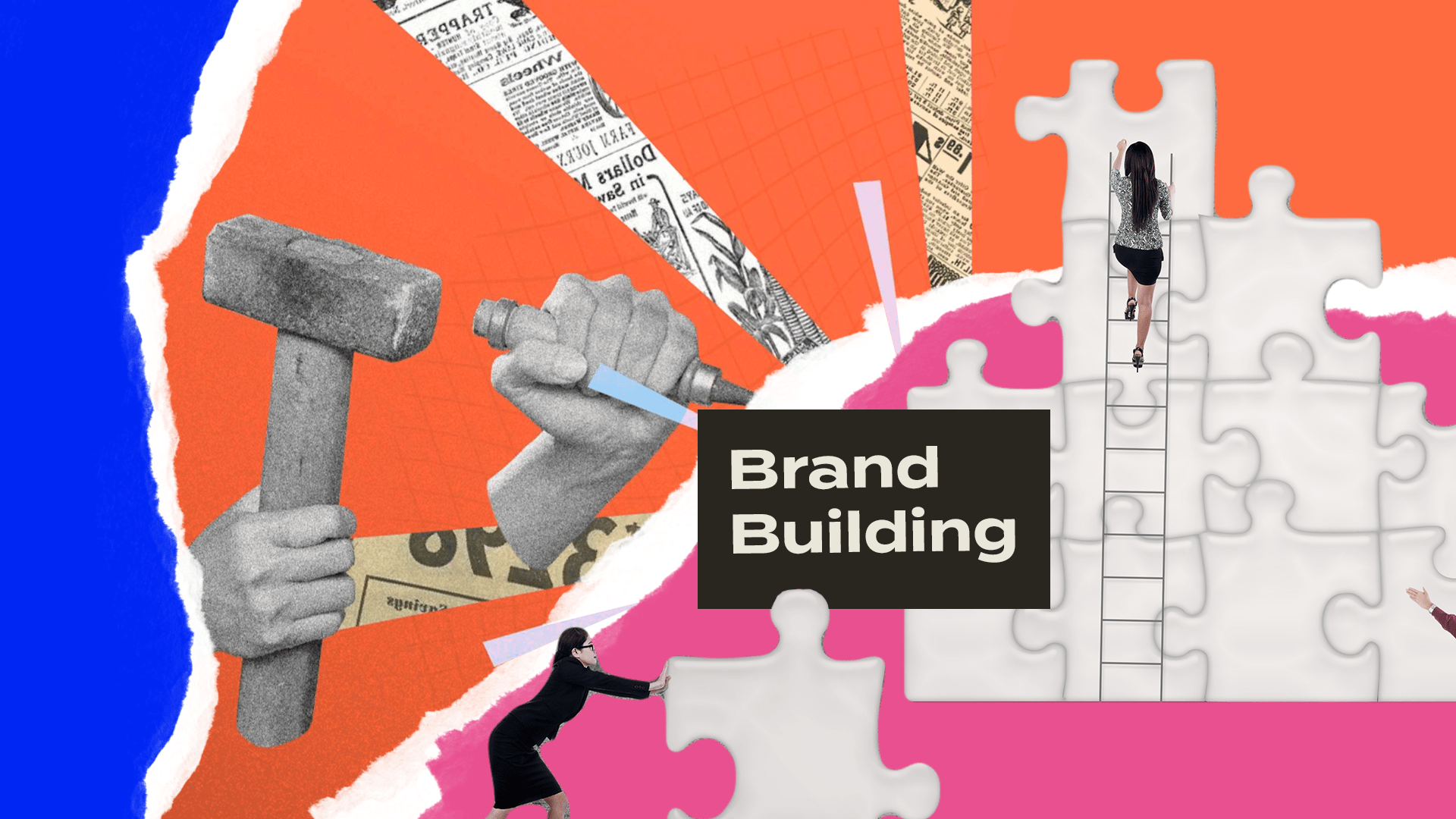
How to Build a Brand in 2026 that Actually Connects
Brand building is your key to surviving (and thriving) in 2026.
It’s not a nice-to-have. It’s not a “part” of your marketing. It has to become the fundamental backbone to every marketing decision you will make from now on. We’re going into an era where gaining the attention and loyalty of consumers will be SO MUCH HARDER. And a strong brand is the operating system that will ensure you win against the competition.
A business without a brand can still trade, of course, but its growth becomes brittle. Easily shaken. Easily copied. Easily drowned out.
We’re living through a fundamental shift in how brands are created, consumed and sustained. AI has restructured content creation and is automating the marketing funnel at pace. Audiences are looking for more. Emotional resonance is playing a bigger role. Founders are becoming as visible as the companies they lead. And consumers are moving between platforms, touchpoints and identities at a speed businesses are struggling to keep up with.
Building a brand in this era means building for complexity, for evolving behaviours, multifaceted identities, cross-channel interactions, and category landscapes that can rise and collapse almost overnight. Having a brand that “looks good” is no longer going to cut it.
So, how should brand building work for the future? This step-by-step guide shows you how to build a brand that resonates in 2026 and beyond.
Brand building in 2026: why it matters more than ever
Brand building has always been important, but in 2026, it has become essential. The cultural, technological and commercial environment has changed so dramatically that businesses can no longer rely on performance marketing, visual aesthetics or social media presence alone to differentiate themselves.
AI is speeding up brand content, but brand will cut through
Let’s address the robotic elephant in the room. This is a major shift that’s already happening, and marketers are already speeding up their work with AI-generated content, automation, personalisation through algorithms and more. What once required a team now takes minutes. This is astonishing progress. But it also means that brands will need to work harder to cut through.
What’s important to understand is this: AI speeds up marketing, but it doesn’t strengthen it. If your brand foundations aren’t clear, your positioning, your voice, your narrative, your emotional core, AI will simply help you produce more content that misses the mark. Scale without strategy lacks impact.
That’s why the brands that stand out in 2026 aren’t the ones producing the most content, but the ones whose content is rooted in something intentional, distinct and emotionally resonant.
Performance marketing is losing efficiency
The cost of digital advertising has been rising steadily. Meanwhile, user attention is fragmenting. Algorithms favour volume, which pushes brands to create more and more for diminishing returns. In that environment, performance marketing becomes less effective unless there is a strong brand foundation supporting it.
When people trust your brand, your ads convert better. When they recognise your story, your content lands faster. When they understand your positioning, your messaging feels sharper.
Brand isn’t a replacement for performance, but it is what makes performance sustainable.
Nike’s recent shift back to brand storytelling after leaning heavily into D2C and performance marketing is a perfect example. Their cultural relevance softened; their emotional connection weakened. They’re now investing in rebuilding that long-term equity because performance alone cannot carry a brand forever.
Audiences are seeking emotional depth
The last decade has been full of “aesthetic-first brands”: beautifully designed, beautifully curated, beautifully photographed, and often emotionally empty. These brands dominated Instagram-era e-commerce, but 2026 audiences want more. They want personality. Perspective. Values that feel lived and a full 360 brand experience that connects with them. They want brands that create meaning.
Emotional resonance has become the real differentiator, and a strong brand is what delivers it.
Founders and teams have become brand assets
Trust is rapidly shifting away from institutions and towards individuals. People want brands with a human centre, a face, a viewpoint, a voice. That doesn’t mean every brand needs an influencer-style founder, but it does mean audiences want transparency about who is behind the products they buy and the decisions they encounter.
In many cases, especially in early-stage companies and service businesses, the founder’s story becomes a crucial emotional anchor.
Authenticity takes on more meaning
Authenticity is a word that’s been bandied around in marketing for the last few years. It’s become a bit of a trope. But it’s now losing its meaning, and we brands need to find it again. Brands used to just be able to say they were transparent, inclusive or ethical. Today, audiences expect receipts. They want consistency between the internal culture and external narrative. They want values that aren’t just communicated but embodied. They want brands that behave in alignment with what they claim to care about.
Every contradiction becomes part of the brand, and not in the way you want.
Cross-channel ecosystems now drive brand memory
Your website. Your emails. Your physical product. Your packaging. Your onboarding flow. Your events. Your DMs. Your social presence. Your founder’s online footprint. Your customer service tone.
Every interaction is part of the brand, and audiences are experiencing brands across more channels, more often, and more fluidly than ever before. Brands are defined by their consistency.
Taken together, these shifts make one thing clear: if you want to build a resilient business in 2026, you must build a resilient brand.
What is a brand really? (hint: it’s not your logo)
Many businesses still approach brand building as if the brand is some combination of visual elements: the logo, colours, typeface, and graphics. These things absolutely matter, but they are not the brand.
A brand is the meaning someone attaches to your business. It’s the story they tell themselves about you. It’s the assumptions they make the moment they encounter your product, your team or your communication.
Our favourite analogy is the café test: if someone opens a MacBook, you unconsciously attach meaning to them. They’re creative. They’re modern. They probably work in a visual field. When someone opens an HP laptop, different assumptions arise. That’s brand at work, an entire emotional association built from years of consistent cues.
Your logo, colours, fonts, photography etc, is simply the visual expression of this meaning.
Your brand positioning is the space you want to occupy and what makes you different in your market.
Your brand identity is who you are, expressed through visual and verbal choices.
Your brand proposition is the promise, value and meaning you commit to delivering.
Brand building is the ongoing practice of shaping these perceptions consistently over time. And yes, it takes time. But the cost of not doing it is steeper.
How to build your brand: The Brand Building Loop
Instead of steps, we use a loop. An ecosystem. A cycle that brands move through repeatedly as they grow, evolve and shift in culture.
Here is how we build brands today.
1. Know your people, properly
Most companies think they know their audience, but they know a demographic, not actual humans.
“Women aged 25-45” tells you nothing about how they think, feel, behave or choose.
“Professionals in X industry” says nothing about their motivations or frustrations.
“Millennials and Gen Z” is a category so vague that it means almost nothing.
In 2026, audience understanding requires psychographic and behavioural insight:
- What do they care about?
- What identity are they trying to build?
- What cultural references influence their decisions?
- What emotional triggers matter to them?
- What tensions shape their relationship with your category?
- What expectations have other brands set, and how do they feel about them?
This is why creative translation of data is such a vital part of our work. Many brands have more insight than they realise, buried in customer emails, reviews, sales calls, social comments and internal knowledge. The power comes from interpreting that insight strategically into a built brand that connects.
In workshops, we often witness a shift: a founder realising their real audience is not who they thought, or that their early adopters were actually motivated by something deeper than convenience or price. One founder insisted their audience prioritised speed. In reality, the audience prioritised feeling in control. That difference changed everything about their messaging and identity.
Audience understanding is not guesswork. It is the emotional ground from which everything else grows.
2. Build your brand’s inner world
A brand’s inner world is its backbone, the emotional centre that informs every creative and strategic decision. Without this, visuals become decoration, messaging becomes inconsistent, and marketing becomes reactive.
Your inner world includes:
- Purpose: the reason your brand exists
- Vision: what you’re trying to create in the world
- Mission: the practical path toward that vision
- Values: the behaviours that guide your decisions
- Brand story: the origin of your brand and how it should be told
- Internal culture: how your team behaves and operates
These foundations are often misunderstood or seen as individual points, but they are interconnected tools that the internal reality of your external brand must reflect. A value that isn’t lived leads to inauthentic marketing. A purpose that isn’t felt becomes empty words.
Brands built without an inner world often lean heavily on aesthetic identity because they have nothing deeper to express. Brands with a strong centre feel cohesive even before visuals appear.
This is the difference between a beautiful brand and a believable one.
3. Shape the position you want to hold in people’s minds
Positioning is one of the most powerful components of brand building, and one of the least understood. It’s about differentiation and market cut through. It’s the difference between a brand that’s successful and a brand that gets lost.
It’s the answer to: What do we want people to think of when they think of us?
This requires clarity about:
- Your category
- Your audience’s unmet needs
- The emotional tensions in your space
- The promises competitors are making
- The gaps in the narrative
- The value you offer that others don’t
- The emotional benefit you deliver
Positioning doesn’t have to be clever. It needs to be clear. Clear enough that your audience could describe you accurately in a single sentence.
From this clarity comes your brand positioning statement and eventually, your brand proposition, your refined and emotionally charged statement of value. It guides messaging, identity, experience and marketing strategy.
Bad positioning creates confusion. Good positioning makes everything easier.
4. Find your brand’s personality and voice
This is where your brand becomes a 360 character, with depth, point of view and a way of speaking.
Many brands fall into the trap of generic personality traits. “Bold.” “Friendly.” “Premium.” These words feel safe, and that’s exactly why they’re ineffective. They don’t guide creative decisions. They don’t differentiate. They don’t express who you are.
A brand’s personality must emerge from your inner world and your audience’s expectations. It must feel emotionally grounded. It should reflect how you think and how your audience wants to be spoken to.
And importantly, your tone of voice can’t be a document that gathers dust. A good tone of voice system includes examples, writing principles, clear dos and don’ts, and guidance for real scenarios. It can also be channel-specific ,including how your tone may adapt across social posts, emails, packaging, long-form content and more.
If your team can’t use it, it isn’t a tone of voice.
5. Decide on a brand name
Naming sits at the intersection of strategy and identity. It’s one of the first major decisions you make, and one of the hardest to change later. A strong name carries meaning, creates recognition and sets a tone before anyone reads a line of copy.
A good name should be:
- memorable
- easy to pronounce
- emotionally aligned with your positioning
- culturally and legally safe
- distinct in your category
- flexible enough to grow with you
Names aren’t chosen because they feel cool in a brainstorm. They’re chosen because they become assets, the anchor for every future expression of the brand.
6. Nail your messaging
Messaging turns your inner world into language. It shapes the way you communicate what you do, why it matters and how you want people to feel when they encounter you. It is the foundation for every piece of communication your brand will produce, from website copy to sales decks to TikTok scripts.
A strong messaging system usually includes:
Core narrative
Remember the inner world we built? This is where you create that clear story that threads your purpose, mission and positioning into an idea people can understand quickly. It’s not a pitch. It’s the emotional heartbeat of the brand.
Audience insight
The tension or unmet need your audience feels is the emotional driver behind their decisions. Messaging becomes magnetic when it speaks directly to this.
Key messages
Three to five ideas your brand wants to own. These are your communication pillars: the themes, truths and points of view that appear again and again. They become the foundation of your content strategy and ensure your brand doesn't drift.
Reasons to believe
Your proof. The details, evidence or philosophies that give your story weight. Without proof, messaging lacks the credibility needed to build trust.
Slogan
Your slogan is the distilled expression of your messaging: a short line that anchors your narrative in the mind of your audience. It’s the tip of the spear, not the whole story.
Messaging gives your brand a voice before visuals ever enter the room.
7. Build your visual identity
Once you know what you’re saying and how you’re saying it, you can shape how your brand looks and behaves visually.
Visual identity includes every expressive element:
- colour palette
- typography
- imagery and illustration style
- motion principles
- layout and spatial rules
- texture, pattern and graphic devices
In 2026, visual identity must perform across a wide set of environments, mobile-first design, short-form video, digital products, packaging, social media, editorial layouts, sales decks, signage and beyond.
A strong visual identity is:
- recognisable - you know it instantly
- cohesive - everything feels like it belongs to the same world
- purpose-led - every choice expresses strategy
- adaptable - it works in motion, static formats, small spaces and big ones
Visual identity isn’t there to “make things look good.” It’s there to communicate personality, create meaning and build memorability.
8. Bring it to life in the real world
This is where your brand stops being theory and becomes something people can actually feel. A brand is not defined by guidelines. It is defined by what happens when real people meet your company in real moments. This is where alignment either lands beautifully or unravels quietly.
The 360° brand experience
A brand comes alive when every touchpoint reinforces the same emotional truth. This is your 360° experience: your website, packaging, social content, onboarding, customer service tone, physical spaces, founder presence, emails, product decisions and community interactions.
Individually, these moments seem small. Together, they build brand awareness, trust and loyalty.
When they feel consistent, people recognise you long before they see your logo. When they do not, the brand fragments and fragmented brands rarely last.
Internal application
Your team is the first expression of your brand. If the people building and supporting your product do not embody the brand, no visual identity can hold it together.
Internal application means giving teams practical tone of voice guidance, clear decision-making principles, values that shape everyday behaviour and a shared understanding of your positioning and messaging.
A brand that is lived internally becomes impactful externally.
External application
Externally, your brand shows up everywhere your audience encounters you. Yes, packaging, unboxing and social media matter. So do the smaller interactions, such as the tone of your customer emails, how your founder speaks publicly, community moderation, onboarding clarity, sales conversations, content quality and the intent behind partnerships.
These moments shape how your brand feels. So ensure you are bringing the brand strategy, positioning and narrative into every conversation.
9. Test, refine and loop
Brands cannot remain static for a decade anymore. The world moves too fast. Evolution must become part of your brand’s rhythm. Not constant reinvention, but regular reflection and refinement.
This is why we call it a loop. If you build your brand in the right way, you won’t have to do a full rebrand for a long time, but we’d be lying if we said that was the end of the brand-building journey. You will always be looking at your brand and refining it based on audience feedback and data understanding.
What are the key steps involved in building a strong and memorable brand from scratch?
If you asked us this casually over dinner, this would be our answer: a memorable brand comes from knowing your people better than your competitors do, understanding your own truth deeply, choosing your brand positioning with intention, speaking with purpose, expressing yourself creatively and consistently and allowing your brand to evolve as your company grows.
Brand building is not about how much you produce. It is about clarity, emotional connection and the way your brand identity and brand experience shape how people feel about you. A memorable brand is built from many small decisions made with consistency and conviction.
What is the 3 7 27 rule of branding?
The 3 7 27 rule explains how many interactions it usually takes for your brand to become familiar, remembered and trusted. People typically need around three exposures to recognise you, seven to remember you and twenty-seven to trust you enough to act.
The rule still applies in 2026, but repetition alone is no longer enough. Repetition with emotional meaning is what creates strong brand equity. People remember how your brand made them feel, not how many times they saw it appear in their social media feeds.
This is why clear messaging, a strong brand identity, a distinct tone of voice and memorable brand storytelling are essential to building a long-term brand today.
Myths and mistakes in brand building, we hear all the time:
“We just need a logo.”
A logo is not a brand. It needs to reflect a deeper strategy.
“We’ll know it when we see it.”
If you don’t define your brand, design will become a guessing game.
“We want to look like [other brand].”
Copying another brand ensures you’ll never be remembered.
“Brand isn’t measurable.”
Brand reduces acquisition costs, increases loyalty and improves recall, all measurable. But the length of those returns can vary.
“B2B doesn’t need brand.”
Brand is just as important in B2B. Especially as it becomes more competitive every single day.
Brands getting it right, and what we can learn from them
Ffern
Ffern offers one of the strongest examples of modern brand building in action. Their ledger system, seasonal releases and artful brand world create a ritualistic, sensory experience. Everything is intentional: the typography, the slow, poetic communication, the limited-edition drops. It’s emotional, distinct and impossible to replicate without understanding the philosophy beneath it.
The Ordinary
The Ordinary succeeded because they saw what the beauty industry refused to admit: consumers were tired of inflated claims and vague promises. They replaced glamour with clarity, and aspiration with transparency. And you can see this through every touchpoint.
Their brand-building works because:
- They identified a tension, confusion and mistrust, and answered it with radical simplicity.
- Their name, packaging and voice all communicate honesty.
- They use education as their primary storytelling tool.
- Their community formed organically because people felt respected, not marketed to.
- Their visual identity reinforces their truth.
In a category obsessed with aesthetics, they chose substance, and substance won.
Brands we’ve built
Some more inspiration for your brand-building process.
Kink Compass
Built from scratch with foundational clarity, bold identity and audience resonance, now gaining strong momentum because the early brand work was done right.
Matchstick
An award-winning brand transformation that proves how strategy and creativity can reset a brand’s trajectory. Their identity didn’t just evolve visually; it became emotionally anchored.
Strategem
A B2B brand that demonstrates how clarity of positioning and identity can elevate a company beyond complexity and category sameness.
Why your brand matters more than ever in 2026
If there is one message to take from this guide, it is this. Brand building is not a nice-to-have or a design exercise. It is the strategic and emotional foundation that supports everything else. Your marketing strategy, your brand awareness, your customer base, your brand community and your long-term growth all depend on it.
AI will speed up marketing. Competitors will move faster. Categories will shift. But the brands that understand who they are and who they serve will always rise above the noise. A strong brand gives you meaning, coherence and distinction. It gives people a reason to choose you, trust you and stay with you.
If you want support building a brand people actually feel, let’s chat. We build brands with depth, clarity and emotional intelligence designed to stand out in 2026 and beyond.


Go on… steal all of our brilliant ideas


Go on… steal all of our brilliant ideas
Fancy some emails you’ll actually want to read? Sign up for our newsletter and we’ll slide into your inbox with insights on how you can make your brand hotter than Dante's inferno.