

Black Friday Marketing Ideas That Build Your Brand (Not Just Your Discounts)
Be real; a Black Friday post in May?
It may seem offensively early, but since Black Friday has gone from one chaotic day to a weeks-long event, marketers should be prepping earlier and earlier each year. Black Friday is now known for over-exaggerated discount claims for products that haven’t actually changed price and campaigns that compel customers to wait until November before they buy anything at all.
But it doesn’t have to (and shouldn’t) be this way. It won’t necessarily be cheaper or easier, but there is a smarter and better way.
This post is for marketers and founders who want to use Black Friday to build their brands, not just slap a clearance sticker on their products. We look at the tactics, and emotional and strategical thinking that makes a Black Friday campaign stand out amongst the hundreds of others in inboxes.
Why most Black Friday marketing is a race nobody wins
Most Black Friday marketing strategies are built on the assumptions that the brand with the biggest discount wins. This might be true for the weekend, but it creates bigger problems year-round. When you train your audience to only buy from you in November, you've told them your product is worth less than the price they pay the rest of the time. You've squeezed your own margins, and you look exactly the same as every other brand out there.
Klaviyo's 2024 BFCM analysis found that huge discounts mattered less than most brands assumed. Consumers prioritised product quality and brand loyalty over the size of the markdown. This doesn’t mean that Black Friday is going away anytime soon. In 2024, Black Friday sales hit a record $10.8 billion in US online spending alone, and participation continues to spread globally. Brands should still be showing up for Black Friday, but they need to know how to do so effectively.
The brands that come out of Black Friday with more than a revenue spike are the ones who treat it strategically. And most of your competitors won’t do this, so the bar for doing it well is lower than it looks.
Black Friday is a moment: treat it like one
Black Friday is a cultural moment before it’s a sale. People are already talking about it, and they have strong feelings. Like marmite, you either love it or hate it, but every year, it gets people scrolling and sharing. People start conversations about the deals they found, the things that sold out, and the brands that surprised or disappointed them.
Before you start campaign planning, you need to understand what Black Friday means to your specific target audience; the people who already buy from you.
Do they love Black Friday? Brilliant; give them something to be excited about. Do they find the whole thing a bit exhausting and performative? Also brilliant; there's a campaign in that. Are they shopping for gifts for other people, or investing in something for themselves? Are they value-led, quality-led, or driven by community and social proof? Would they rather feel like an insider getting a good deal, or a bargain-hunter battling the Black Friday rush?
A luxury brand, for example, may not want to touch Black Friday at all, which is a legitimate brand values decision. Black Friday needs to connect authentically to your brand for it to work. The brands that get it right are the ones that are relevant to how their audience feels in the moment. Stop shouting “Sale!” and start making people feel something.
At I Am Female*, this is where we start every single Black Friday strategy. What's the emotional territory available to your brand in this moment, and how do you own it in a way nobody else can?
Start earlier and smarter than your competitors
If you're starting your Black Friday planning in November, you've already behind.
Klaviyo's 2024 analysis showed that many brands began launching Black Friday promotions as early as November 7, and consumers were receptive, with many making purchases from brands as early as three weeks before Thanksgiving. If you're waiting until the week of Black Friday to start communicating, your competitors already have the attention and intent you needed.
The most effective early Black Friday campaigns do one of three things. They build anticipation; a teaser that tells people something worth waiting for is coming. They capture intent; a "join the waitlist" or "sign up for early access" that grows your list and shows demand. Or they establish the emotional frame for the campaign before the Black Friday deal goes live, so when you do announce, your audience is already listening. This means your Black Friday communications should make the sale feel inevitable, rather than making the sale.
In early October you should start seeding content, build your email and SMS list, and get your early access sign-up page live. Know what you're offering before you start teasing it. Trust us, you do not want to be running around in November trying to scrape together a last-minute landing page. For small businesses especially, this lead time is one of the most important competitive advantages. The big online retailers have entire teams on this from Q2. Your edge is moving fast and knowing your audience better than they do.
FOMO sells
Everyone wants to be a part of the next exclusive thing. That’s why Black Friday early access schemes are so effective. Before your Black Friday sale goes live, a portion of your audience gets in there early. It could be your email subscribers, your loyalty programme members, repeat customers, or any other specific group that makes people feel chosen.
When customers feel valued rather than marketed at, they’re more likely to buy. And this exclusivity creates scarcity; if a group of people get there first, things actually could sell out before new customers even see the Black Friday offer. It also means more organic marketing as people share their early access status, and it gives you a chance to show your customers that you care.
A good example of this is Jones Road Beauty, a brand that doesn’t do sales. Instead, they focused on limited-edition product drops available exclusively during the holiday weekend, and they consistently sold out on the first day. In one iteration they brought in as much revenue in the first 30 minutes of Black Friday as they had during the entire BFCM weekend the previous year.
For early access to work, you need: a meaningful offer, an audience that already trusts your brand, and a communication plan that makes them feel chosen.
Rethink the discount: offers that protect your margins and your brand
Everyone loves a discount, but slashing your prices for Black Friday will cost your brand in the long run, in margins and expectations. When a customer buys your £120 product for £60 during the Black Friday weekend, you've told them the product is worth £60. Good luck selling it for £120 in February.
Klaviyo's data found that consumers often prioritised product quality and brand loyalty over the size of a markdown. So instead of shredding your margins, value-add offers like limited-time products, discounts for specific segments, or exclusive gifts bundled with purchase can drive strong conversions.
Heavy discounts can also cause mistrust. Black Friday haters know that prices are constantly inflated ahead of the weekend to make the markdown look bigger, and they are fed up, for good reason. This kind of Black Friday behaviour is shady and will do more damage than good for your brand’s reputation.
So what are the alternatives?
Bundle deals pair products that are better together, increasing average order value without reducing the perceived worth of individual items. A free gift with purchase adds value without cutting price, and if people actually want the free gift, it can be a campaign in itself. Gift cards offered at a discounted rate are a great way to guarantee return visits from new customers while giving them a good deal. Tiered discounts (spend £50 and get 10% off, spend £100 and get 15%) reward commitment without training bargain-hunters. Limited-time offers and limited-edition drops create scarcity and desirability rather than urgency based on price alone.
And don’t underestimate free shipping. £30 with free shipping hits different from £25 and £5 shipping costs. It consistently outperforms percentage discounts as a conversion driver, particularly for online businesses and online retailers. Exclusive discounts are right for many brands, but you need to be honest about why. Be specific and make the customer feel special, rather than plastering "70% OFF EVERYTHING!!!!" which just screams desperation.
Email marketing and SMS: the Black Friday channels that convert
Whatever else you do for Black Friday, your email marketing strategy needs to be prepped well in advance. For most businesses, this is where the majority of Black Friday revenue comes from.
Sinch's 2025 BFCM survey of over 3,000 global consumers found that 71.7% want brands to communicate about BFCM across multiple channels, with email leading at 56.5%, followed by websites at 42.9% and social media ads at 41.9%. Meanwhile, 46.5% of shoppers want to hear from brands through at least one mobile channel.
Brands that added SMS to their Black Friday email marketing in 2024 experienced a 20% year-on-year increase in ecommerce revenue during BFCM, accounting for more than $100 million in gross merchandise value (Klaviyo, 2024).
While email marketing is still the primary channel, the brands that paired email with SMS, saw outsized results. The two channels work differently: with email, you can tell your story and show the products, while SMS gets the attention when the Black Friday sale is ending. Build your email marketing campaigns to run across the full Black Friday period. A teaser, a VIP early access send, a launch email, a mid-campaign email, and a final hours email plus SMS push.
We love a cryptic wordplay subject line, but Black Friday is not the right time. People are scrolling, they’re probably overwhelmed by the 100s of other Black Friday emails, you need to be clear about what you’re offering. Save the brand voice for the email body, not the subject line.
Little Sleepies, a family pyjama brand, had to start their Black Friday sale later than competitors due to scheduling issues. To maximise their shorter window, they sped up abandonment flows from one hour to 30 minutes after inactivity and increased flow frequency during the sale period, implementing strategic double-sends targeting engaged but non-converting customers. This timing optimisation helped them drive more revenue on day one than they had projected for the entirety of BFCM.
This shows that effective Black Friday email marketing campaigns are about customer behaviour. Use analytics to track what's working in real time and adjust accordingly, especially if you're running flash sales at different points across the day.
Creative Black Friday campaign ideas
You can have the best discount in the world, but if your campaign is dryer than plain crackers, no one’s going to care. These Black Friday Campaigns are creative, culturally relevant, and understand their audience. These are the ones worth studying.

Deciem / The Ordinary: "Slowvember"
Deciem, the company behind The Ordinary, replaced the traditional Black Friday promotion with a month-long initiative called "Slowvember." Their annual "Blackout Period" shuts down all brand websites and stores on Black Friday. Instead, they apply a 23% discount to all products throughout the entire month of November, encouraging considered shopping over panic buying. Previous iterations of the Slowvember Black Friday campaign saw a 400% sales lift for the NIOD brand alone, with 51% of new customers being first-time buyers.
Why it's one of the best Black Friday campaigns: it reflects the brand’s core values of radical transparency. The campaign attracts customers who are specifically aligned with these beliefs; the ones a values-led brand wants to acquire.

Walmart: "Deals of Desire"
Walmart produced a 10-part cinematic miniseries "Deals of Desire”, turning bland Black Friday deal announcements into entertaining drama straight to customers’ TVs, YouTube, TikTok, and OOH media. Creative data showed the campaign boosted purchase intent by 5.8% while ranking well above industry averages for Creative Effectiveness Score.
Why it worked: Walmart had the budget to go big, but the principle scales. People want to be entertained, and with a little bit of creativity, any brand can do this.

Lush: Limited edition orangutan soap
Lush are known for their ethical values and they lived these in their 2017 campaign, launching limited edition orangutan-shaped soap to raise funds for the Sumatran Orangutan Society. At the time, there were only 14,600 orangutans left in the wild, which is the number of soaps Lush made. And they sold out of every single one within days.
Why this worked: Lush put their beliefs over profit, raising funds for important conservation work, while solidifying trust with their customers that share their values.

Patagonia: doing nothing (on purpose)
Outdoor clothing brand Patagonia has become well known for either opting out of Black Friday or using the weekend to draw attention to overconsumption. They've donated 100% of Black Friday sales to environmental causes, and ran campaigns actively encouraging people not to buy new things.
Why it works for them: it's consistent with who they are every other day of the year. And as we'll come to in the next section, that consistency is the only thing that makes the anti-Black Friday move land.
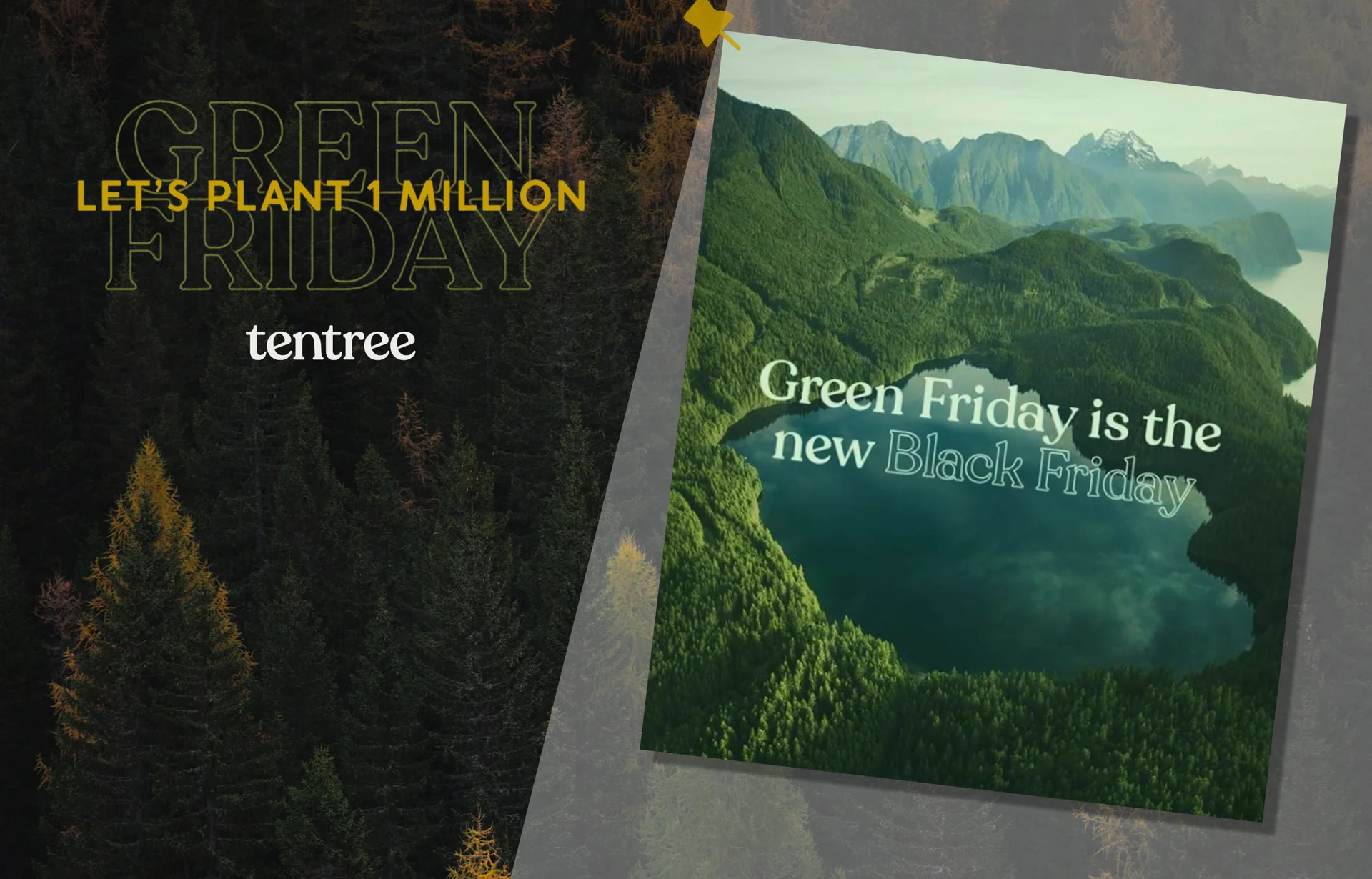
Tentree: Green Friday
Black Friday is not on-brand for sustainable clothing company Tentree, so they do Green Friday instead. They give customers deals on ethically-made products that plant ten trees for each item purchased. Offering discounts, mystery gifts, early access, and free shipping, setting a goal to plant one million trees through their BFCM sales.
Why this works: Tentree is smart about their profit margins and the environment. This campaign raised awareness and increased sales while keeping in line with their ethical brand values.
Live streaming and social-first brands
Live streaming is one of the most effective ways to create real-time engagement during Black Friday. Brands that run live shopping events, on TikTok, Instagram, or shopping platforms, can combine the flash sale energy with brand authenticity. MeUndies ran an exclusive Facebook Live event during Black Friday that amassed over 13,000 views with a 25% conversion rate. One of the best Black Friday marketing examples of social-led selling.
The live format works because it's immediate, it's social, and it creates urgency that feels natural. It's also a great way to showcase products that are hard to convey through static ads, and to let your brand personality do the selling.
Being reactive on social: how to become part of the conversation
Black Friday is one of the most culturally active moments of the retail calendar. People are online, spending, talking, posting; social media platforms on Black Friday become a live event. Polished content can only get you so far. The brands that win on social media during Black Friday are often the ones that react fastest to the current conversations. They’re aware of what's selling out and what’s going viral. They’re primed to respond to cultural commentary in their brand voice.
Being reactive on social media during Black Friday is underused because it requires something most businesses don't have during their busiest day: someone with the authority and creativity to post quickly and make it land. Prepare for this in advance. Have pre-approved creative assets that can be adapted, and know your brand voice well enough that whoever is managing social on the day can respond without waiting three days for sign-off.
Beyond social ads and planned content, think about the natural conversations in your category during the Black Friday period. How can your brand become a part of it rather than interrupting it with a promotional graphic? Gift guides are a brilliant way to do this. A well-made gift guide contextualises your product. Gift guides work because they serve the customer's problem (what do I buy?) while naturally featuring your products. They also have longevity on search engines, driving traffic beyond the Black Friday weekend.
Influencer marketing during Black Friday follows the same rule as everything else: it only works if it's authentic. You need to co-create with people who use and love your products, not the cheapest creator who has availability. Customers will clock fakeness a mile off. User-generated content from customers provides real social proof, and can be more powerful than any social ads you run. Glossier demonstrates this well. They use real social media screenshots on Instagram to promote their products organically.
Your audience knows when their being broadcast to, so Black Friday social media marketing needs to include them. The brands that do it best are the ones that are already part of a community, and who use Black Friday to strengthen that community rather than just extract revenue from it.
The anti-Black Friday move: is it right for your brand?
There's a version of opting out of Black Friday that is brave; one that aligns with brand values. There’s another version that is a press release dressed up as a values statement from a brand that has no discernible brand values the rest of the year
Deciem's Slowvember works because The Ordinary has always been about radical transparency, accessible skincare, and not conforming to the typical beauty industry standard. Their Black Friday strategy is the brand. Outdoor clothing brand Patagonia works for the same reason. Everything they do is consistent with the environmental values that make their anti-consumerism stance credible. They've earned the right to opt out.
If your brand doesn't have that consistency, the anti-Black Friday move will feel hollow. People will notice. And being called out for performative values-washing during the most commercially scrutinised retail moment of the year is not hot.
Anti-Black Friday positioning can work as long as it connects deeply with your brand values and who you are as a brand. Black Friday isn't right for every business, and making that clear can be a powerful brand statement, if you've earned the right to make it.
Want to think about what challenger brands do differently all year round? We've written about that here: Challenger Brand Marketing Strategy: Are You Actually Challenging Anything?
If you haven't planned anything yet, read this first
Every year, someone comes to us with the same question in late October: we haven't planned anything for Black Friday yet, is there still time? The honest answer is: ask whether it's worth it at this stage.
You can always execute a campaign fast. But it also needs to be good. A half-formed Black Friday marketing campaign with messaging that doesn’t land will do more harm than not showing up. Jumping on the bandwagon is tired and predictable; don’t do it simply because you think you should. Save your energy, and start planning properly for next year from Q2.
If you do still have time to pull something meaningful together, be ruthless about scope. One channel done well beats five channels done badly. A single clear and compelling Black Friday offer is better than a confusing spread of promotions. Set clear goals for what success actually looks like before you begin. Know what you're saying, know who you're saying it to, and do that thing extremely well.
And whatever you do: don't inflate prices ahead of the Black Friday period to make the markdown look bigger. People aren't fooled by this. It's one of the most common reasons Black Friday campaigns destroy trust, and in the social media era, it spreads faster than spilling the tea in your office lunch room.
Need help figuring out whether Black Friday is right for your brand this year, and what a properly considered campaign would look like? That's exactly what we do. Book a call with us here: https://www.iamfemale.co.uk/contact-us
Your Black Friday marketing checklist
Whatever time of the year you start planning, here's what a properly considered Black Friday plan needs. Use this as your benchmark for whether you're ready, not just whether you've got a discount code and an email template.
Strategy (set this before anything else)
— Is there a genuine reason for your business to participate in Black Friday this year?
— What does the Black Friday moment mean to your specific target audience, and how does your brand connect to that emotionally?
— What's your angle? What are you doing that none of the other online retailers or brands in your category are doing?
— Have you set clear goals, whether that's revenue, new customer acquisition, email list growth, or brand visibility?
— Have you decided on your offer type; discount, bundle deals, free gift with purchase, gift cards, early access, limited-edition drop, free shipping, or something else? Does it connect to your brand positioning?
Timing
— From early October: list-building, early access sign-ups, teaser content live
— 3-4 weeks before Black Friday: VIP early access communications, pre-sale content, campaign creative live on social media platforms
— Week of Black Friday: full campaign live across Black Friday email marketing, SMS, social, and paid digital marketing channels
— Black Friday day: reactive social media content; "final hours" push via email and SMS
— Post-Black Friday: follow-up flows for purchasers; retention-focused content to convert new customers into loyal customers
Email marketing and SMS
— Teaser email (what's coming)
— VIP early access send (for your loyal customers segment)
— Launch email (full offer)
— Mid-campaign email (for opens who didn't convert)
— Final hours email + SMS push
— Post-purchase flow (for new shoppers and returning customers alike)
Creative and social media marketing
— Does your creative look and feel like your brand, or does it look like every other Black Friday campaign?
— Is your Black Friday offer communicated clearly in the first two seconds of any asset?
— Have you prepared gift guides as content to drive organic traffic on search engines before and during the Black Friday period?
— Have you briefed your social media team on reactive content and given them appropriate autonomy to act on the day?
— Are your social ads targeted tightly enough to reach your target audience rather than just a broad demographic?
— Do you have a live streaming plan, whether a live shopping event, a Q&A, or behind-the-scenes?
— Have you considered countdown timers on landing pages or in emails to create natural urgency without manufactured panic?
— Is your online store technically ready for a spike in traffic? Have you tested the checkout on mobile devices?
After Black Friday
— Have you set up post-purchase flows to serve new customers and encourage repeat purchase?
— Have you got a plan to re-engage new shoppers who bought once but haven't returned?
— Have you planned a debrief to capture what worked and what didn't before you forget?
— Are you starting to think about next year? (The answer should be yes, and it should happen before December.)
The brands that nail Black Friday are the ones who take the time to plan it year-round, the ones who understand their audience, find their angle, and go against what every other brand is doing.
If you want to build a Black Friday marketing strategy that does something different, and actually reflects your brand, we'd love to talk. Book a call with the I Am Female* team here: https://www.iamfemale.co.uk/contact-us


Go on… steal all of our brilliant ideas


Go on… steal all of our brilliant ideas
Fancy some emails you’ll actually want to read? Sign up for our newsletter and we’ll slide into your inbox with insights on how you can make your brand hotter than Dante's inferno.