
.png)
10 Best Marketing Campaigns of 2026 (So Far)
The best marketing campaigns in 2026 have a few things in common.
It’s not budget. Not celebrity. Not AI. And definitely not how many trend reports the team read before the brief went out. The best marketing campaigns of 2026 share something simpler and considerably harder to manufacture: a genuine insight about real people, the creative confidence to act on it, and an idea clear enough to cut through across every channel.
We've been watching this year's work closely, as strategists, as creatives, and as people who are just as tired of forgettable brand communications as everyone else. Whether it's TV commercials, social media posts, out-of-home stunts, or scrappy zero-budget activations, what keeps showing up in the campaigns earning the most attention is conviction. Brands that know who they are, understand their target audience (we mean TRULY understand them) and have the courage to follow it through completely.
Here are ten picks for the best advertising campaigns of 2026 so far, what made them land, and what your brand can steal from each. Plus we’ve added in some campaigns from 2025 that caused a stir - for better or for worse. The cautionary tales are just as instructive as the success stories.
Let’s dive in.
What are the defining characteristics of the best marketing campaigns in 2026?
Before the examples, it's worth answering what actually makes a campaign “great”. Because we all know what one marketer thinks is a brilliant concept, may not be another’s.
We haven’t put examples based on spend, reach, or award wins alone. We've assessed each campaign across four things: the strength of the original insight it was built on, the clarity and distinctiveness of the creative idea, the cultural relevance of its timing, and (where data is available) the commercial or social impact it delivered. A campaign with a tiny budget that nailed all four beats a big-budget campaign that nailed one. That's the standard we're holding everything to.
The best 2026 marketing campaigns consistently do five things:
- They start with a real, human insight
- Building with communities.
- Reading the room (as well as deep audience insight)
- One clear idea, scaled.
- Leading with feeling.
Every campaign in this list does at least three of those things. The very best ones do all five.

1. Vaseline: "Vaseline Verified" and "Vaseline Originals"
A 153-year-old petroleum jelly brand winning Social Campaign of the Year at the Ad Age Creativity Awards. Not something anyone had on their 2026 predictions list. This was a 2025 campaign that did so well it was extended into 2026.
Vaseline's "Vaseline Verified" campaign invited scientists to test hundreds of viral TikTok and Instagram beauty hacks, awarding the ones that actually worked a #VaselineVerified seal — combining beauty science with social listening to position the brand as a trusted voice in an overwhelmingly noisy online space. The campaign lived across social media posts, creator content, and in-lab footage that made the science feel as entertaining as the hacks themselves.
The results were hard to argue with. The campaign generated 136 million views, a 43% uplift in sales, and positive consumer sentiment of 87%.
What's clever is they started with the logic and scaled it up. There were over 3.5 million organic posts on TikTok and Instagram with real people using Vaseline in unexpected ways, and consumers were struggling to know what was real, safe, and effective versus what was just hype. Rather than fight that noise, Vaseline became the authority inside it, validating what its community was already saying, and bringing the science to back it up.
Then they went further. "Vaseline Originals" turned those viral creator hacks into actual retail products, publicly crediting the original creators as "Vaseline OGs" and inviting them formally into the brand's innovation pipeline. The first two products launched via TikTok Live and sold out within minutes.
Why it worked
This campaign shifted Vaseline to a stewardship role, acknowledging that the best ideas had never been in the boardroom, but in people's bedrooms and everyday routines. Giving credit to creators was culturally resonant, yes, but it also proved to be a commercial growth engine. Rather than spending energy on creating new stories, Vaseline followed energy that already existed, gave those stories a platform, and rewarded the people who created them. That's a fundamentally different creative process and the results showed.
Your key takeaway
Your community is already telling you what they love about your brand. Find what they’re saying (and how they’re behaving) and follow that thread. You may find the brand story is already there, you just have to build on it and give credit where it’s due.
2. Heinz: The Dipper
Here's a brief that probably never got written: redesign an object unchanged for 75 years, across 11 countries, based on a packaging problem your customers had quietly accepted as just the way things are.
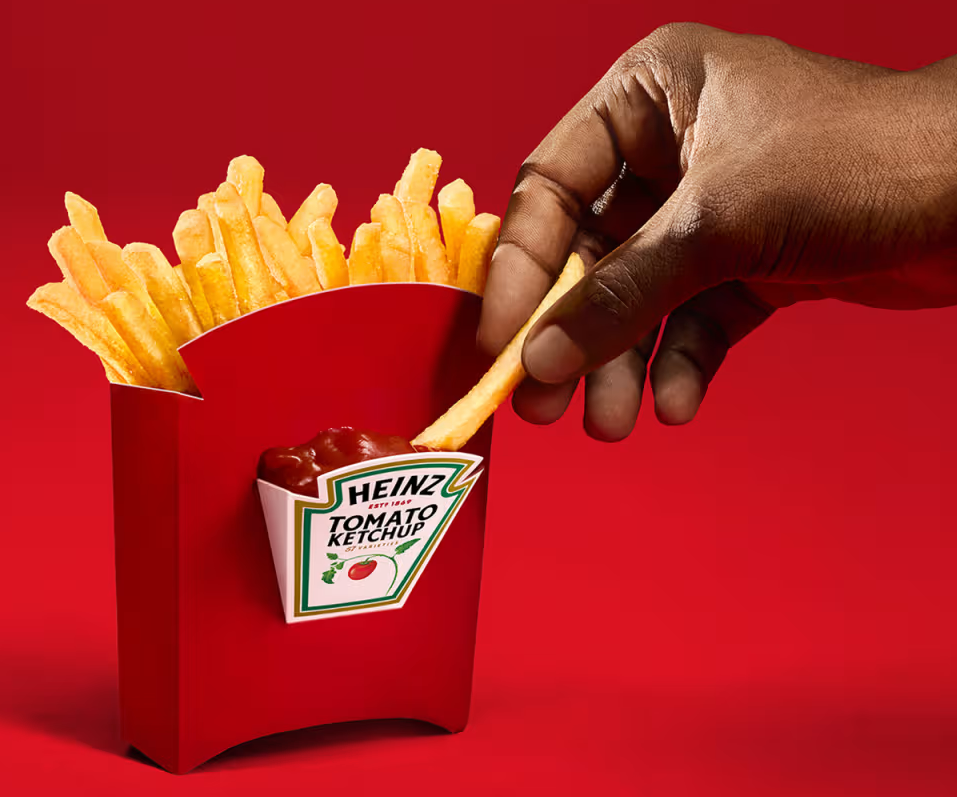
The Heinz Dipper reimagined the iconic red-and-yellow fry box with a built-in sauce pouch, solving the decades-old question of where to put the ketchup, developed with agency Rethink and launching across restaurants and stadiums in 11 countries.
According to Heinz's own research, 70% of ketchup and fry lovers had spilled ketchup eating on the go, and 80% said they'd considered skipping condiments altogether because the packaging made dipping too difficult. Heinz spotted a universal, quietly accepted frustration and made it the campaign.
The broader "Looks Familiar" campaign also drew attention to the fact that fry boxes around the world share the same keystone shape as the Heinz logo, an observation so obvious that no one had ever made it the campaign before. Together, the two ideas showed a brand confident enough in its own brand identity to let it do the work.
Why it worked
This campaign worked because it started with a real, unsolved consumer problem. Rather than launching a new product category, Heinz focused on improving the way people consume a product they already love. This is a perfect reminder that innovation doesn't always require a new category. Sometimes paying closer attention to everyday friction is enough. Solving a 75-year-old problem is also, it turns out, an extremely shareable story.
Your key takeaway
Find the frustration in your customers' experience that everyone's accepted as normal. Fix it. Then make it the campaign.
3. Eli Lilly — "Never Over"
Pharmaceutical advertising is, as a category, reliably safe, functional, and forgettable. Eli Lilly and Wieden+Kennedy Portland had other ideas.
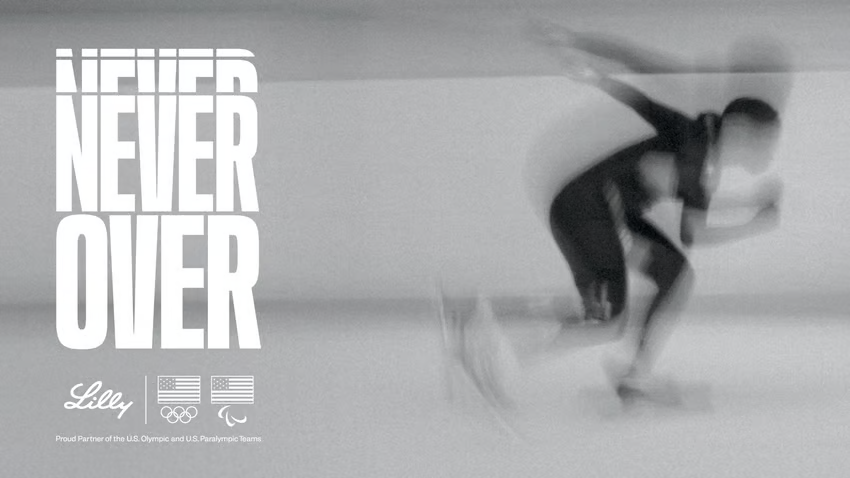
The "Never Over" campaign aired during the Milano Cortina 2026 Winter Olympics, drawing a direct parallel between the relentless work of scientific research and the dedication of elite athletes, using archival footage spanning nearly a century alongside a 1950s-style voiceover on the scientific method to carry the narrative. As a TV commercial it premiered during the Olympic opening ceremony and ran throughout the Games, reaching the kind of captive linear audience that most brands can only dream about.
The campaign stretched across a full 360 activation: a localised campaign in Italy, out-of-home placements in New York and Los Angeles, print in major publications including the New York Times, and digital content throughout the Games.
It was backed by Lilly's Milestones into Meaning programme, which committed $5,000 to health-focused nonprofits for every Team USA medal won or record broken, turning the storytelling into something with measurable real-world impact.
Why it worked
The campaign succeeded because it found the emotional intersection between what Lilly actually does and something its audience already cares about: resilience in sport. They then built from there. And the execution? A true example of exceptional visual storytelling, which made it.
Your key takeaway
Stop focusing on what your brand does. Find the creative language that makes people feel what it does instead. Those are very different things.

4. Coinbase — "Your Way Out"
Most financial advertising tells you what it offers you. Coinbase told the story about what it feels like to break out of the system with them.
Debuting during the 98th Academy Awards in March 2026, "Your Way Out" was created by Isle of Any and directed by Oscar Hudson. Set inside a low-resolution video game world, a non-playable character goes about his pre-programmed life until he takes control and breaks free — eventually arriving in a world populated by real humans. The tagline: "Your way out of their system."
The entire film was shot using real actors with no CGI — the game-world look was built entirely in camera, with suits featuring printed-on fabric details, pixelated set design, and extras trained to walk like game characters. It's technically extraordinary, but doesn't feel like it's trying to be. It feels human. Which is entirely the point.
The NPC metaphor is doing serious cultural work. The idea of a "permanent underclass" — people worried they'll be sorted out of opportunity by AI and automation — has moved from Silicon Valley in-joke into genuine cultural anxiety in 2026. Coinbase read that moment accurately and built a campaign that speaks directly to how a significant portion of its target audience is feeling right now.
Why it worked
The campaign was deliberately designed to live beyond the Oscars broadcast as a larger platform throughout 2026, positioning Coinbase not just as a crypto exchange but as a path to greater economic freedom. The creative intelligence here is in the choice of both cultural moment and craft, a narrative-driven film placed at the one annual TV event that specifically celebrates storytelling. The medium reinforced the message before a single frame had played.
Your key takeaway
Stop asking what your audience wants. Ask what is their current reality without your brand and how does that make them feel? Build your creative from there.
5. Jacquemus — Liline
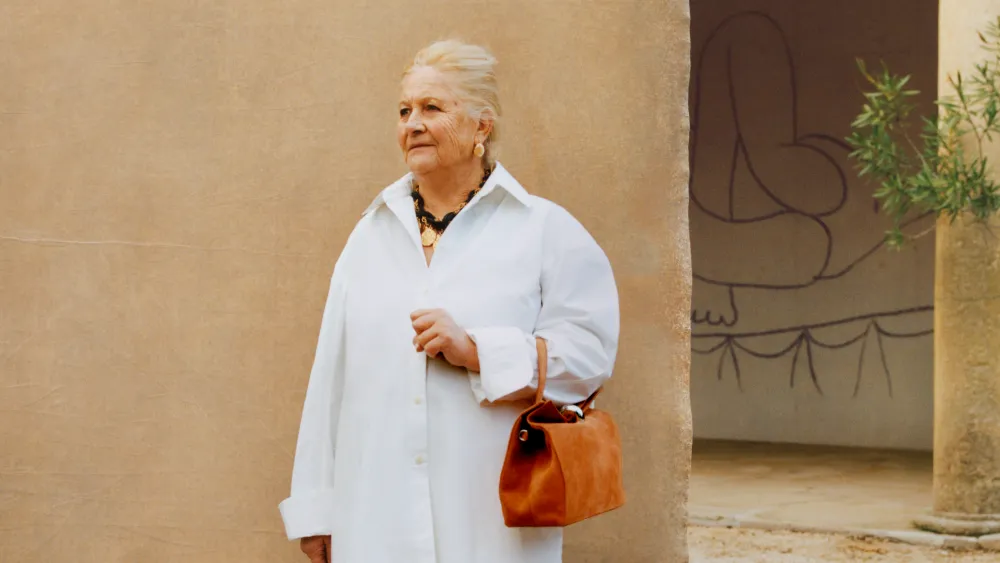
Every fashion brand has a brand ambassador. Almost none of them are the founder's 79-year-old grandmother from a farming village in the south of France.
Jacquemus named Liline Jacquemus as the label's first-ever brand ambassador, described as "the original icon" complete with a tongue-in-cheek ambassador contract declaring, among other things, that "she is not a trend, she is a commitment," that "comfort is conceptual," and that she must smile. Always.
In a market saturated with international celebrity endorsements, Jacquemus prioritised authenticity and emotion over conventional strategy, reinforcing its positioning at the intersection of creative fashion, accessible luxury, and feeling-led communication, while turning a deeply personal story into a powerful brand asset.
Why it worked
It worked because it was completely true to the brand. Jacquemus has always been a story about origins, family, and the south of France. Making Liline official didn't create a new brand identity it made an existing one more visible, more human, and more distinct from every other fashion house on earth. The tongue-in-cheek ambassador contract is also a quiet masterclass in tone of voice: funny, warm, specific, and completely on brand, generating enormous organic coverage without spending a penny on traditional PR.
Your key takeaway
Your most powerful brand story may already live inside your brand. Instead of looking outward, take a look inward for a change.

6. Flat White Or F*ck Off: The One-Day Pop-Up
This one came from a group chat.
Flat White Or F*ck Off was a one-day London pop-up launched on 28 January 2026, inspired by marketing provocateur Rory Sutherland's critique of over-customisation. The concept: serve a single perfectly made flat white, and nothing else. No milk alternatives, no syrups, no menu, no sizes. Just speed, craft, and a very clear point of view.
The project originated as a satirical design concept by graphic designer Charlie Hurst, which snowballed into a real-world activation with content creator Tom Noble and creative production agency Ask The Impossible, hosted outside Outernet at Tottenham Court Road.
The budgets involved were, to put it generously, minimal. The cut-through was anything but. Industry publications, marketing newsletters, and social media ran with it, because the idea is so confident in itself that it becomes impossible to ignore. Rory Sutherland himself amplified it. The campaign generated 32,000 Instagram followers for a concept that served coffee for a single day.
Why it worked
By turning restriction into the creative hook, Flat White Or F*ck Off demonstrated how clarity, confidence, and disciplined execution can outperform infinite options in an attention-overloaded world. The name alone is the strategy. It's a point of view, a product promise, and a conversation starter in four words. In a marketing landscape full of brands trying to be everything to everyone, a brand that tells you explicitly who it isn't for is, paradoxically, enormously appealing to the people it is for. The fact that it went from podcast conversation to real-world activation to investment conversation also proves something important: confidence and conviction can sometimes speak louder than budget.
Your key takeaway
A bold, clear point of view will always travel further than a polished but safe one especially when you're a challenger brand with more attitude than budget.

7. Lloyds Bank: "Bank on Lloyds"
Banks rarely make lists like this.
As the New Year rolled in, Lloyds launched against a sharp cultural insight: 75% of UK adults want 2026 to be a year of personal progress. Rather than meet that with a product push, Lloyds repositioned from financial provider to "trusted enabler of ambition" anchored in two clear brand principles: capability and possibility, with every product from mortgages to savings accounts given a single emotional north star.
With 21.3 million digital app users, the scale of Lloyds' proof points made the promise feel credible rather than aspirational, a crucial distinction most brand campaigns in the financial sector get wrong.
In a cost-of-living moment where most financial brands retreated into features and functional messaging, Lloyds went the other way. They read the national mood accurately, understood what their target audience actually wanted to feel in 2026, and built a brand platform around that.
Why it worked
The campaign's strength is in its strategic restraint. They found one true emotional insight: people want a partner in their ambitions. Then they executed it with discipline across every touchpoint.
Your key takeaway
Proof-backed aspiration always beats empty inspiration. Know your audience's emotional reality and the nuances that come with it.

8. PureGym: "Glow"
Most gym advertising looks exactly the same (cue shots of sweaty bodies on a treadmill and stories around resilience). PureGym chose the one thing none of their competitors were showing: what happens after.
Rather than leading with workouts, PureGym's campaign focused on how exercise makes people feel after they leave the gym centred on a distinctive visual character called Glow, a physical manifestation of post-workout energy that spills out into everyday life, moving beyond the category's familiar imagery of intensity and transformation.
It's a smart strategic move dressed up as a bold creative one. The actual target audience for gym memberships isn't primarily people who love training, it's people who want to feel better in their daily life. PureGym went straight to that insight and left the intensity imagery to everyone else.
Why it worked
Glow as a visual device is distinctive, repeatable, and ownable in a category where most brands are visually interchangeable. That's brand identity doing its proper job — being different, in a way that's rooted in a real insight about why people actually go to the gym. The campaign works on a strategic and a creative level simultaneously.
Your key takeaway
Audit what every competitor in your category is saying. Then find the true, valuable thing none of them are saying and go there.
9. Dove: "The Beauty Machine"
Dove has spent over two decades challenging narrow beauty standards. "The Beauty Machine" is their sharpest, most timely work yet.
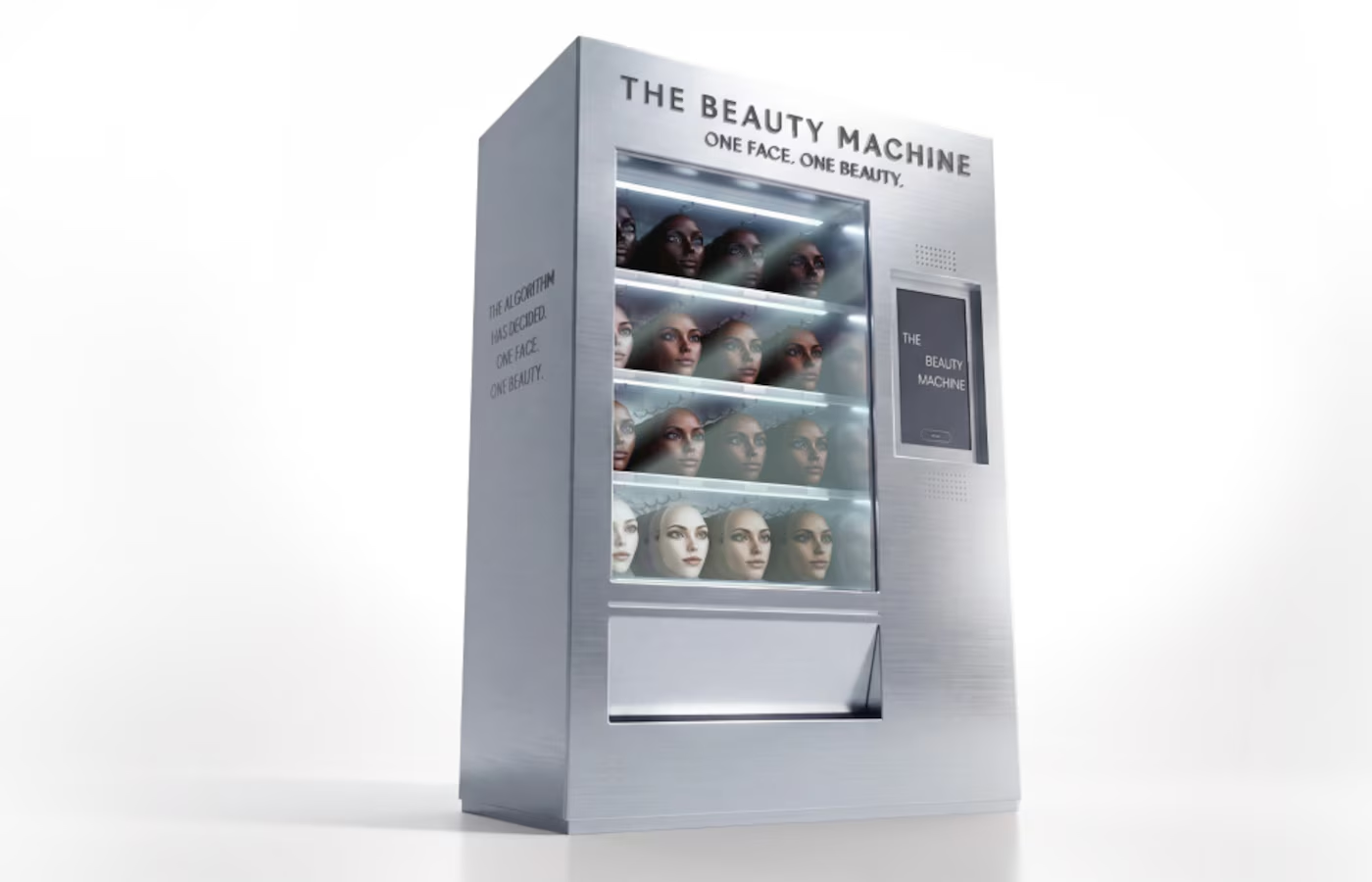
Developed with Ogilvy and filmmaker Lauren Greenfield, Dove installed "The Beauty Machine" at London's Waterloo Station — a vending machine-style installation designed to mimic algorithmic bias. Though it appeared to offer variety, the machine repeatedly dispensed the same idealised face, underscoring how online platforms push increasingly narrow beauty standards.
The campaign then invited passers by to scan a QR code and join the Dove open casting call — submitting unfiltered photos of themselves that began appearing on Waterloo billboards within 48 hours, replacing the algorithm's single face with real, diverse ones. According to Dove's own research, almost one in two women and girls in the UK feel pressurised to change their appearance even when they know an image is fake. The campaign gave that statistic a physical form.
Why it worked
Every brand in the beauty space is talking about algorithmic pressure. Dove made you feel it. By translating an invisible, abstract problem into something you could stand in front of and immediately understand, the campaign bypassed the need to explain and went straight to impact. The open casting call also turned passive observers into active participants and co-creators making it a community moment. And it builds on over 20 years of consistent Real Beauty positioning, which means the audience already trusts the messenger before the message lands.
Your key takeaway
Think about your campaigns as experiences. Take advertising out of it. How can you give your community an experience they will remember and crucially, how can you bring them into the creation process too.

10. Stella Artois: The Snow Billboard
Someone was paying attention and acted on this fast.
As record snowfall hit Toronto, Stella Artois filled an oversized chalice billboard so that the accumulating snow created the illusion of frothy beer foam spilling over the top of the glass.
It's a campaign that only existed because a brand had built the systems, the culture, and the trust to respond to a real-time moment quickly enough to make it matter. The creative idea isn't complicated — it's elegant in its simplicity. The hard part is being ready to act before the moment passes.
Why it worked
Most brands move too slowly. Too many approvals. Too much risk aversion. By the time a reactive idea clears three rounds of sign-off, the snow has melted. Stella captured the moment because they were ready, which is worth examining. Reactive marketing only works when you have a brand identity clear and strong enough to deploy fast, and a team trusted enough to act without waiting for six levels of approval. The infrastructure enables the moment.
Your key takeaway
Cultural responsiveness is the result of a brand with a clear enough identity and a team trusted enough to act before the window closes. Do you have that in place?
What the best marketing campaigns of 2026 have in common
Look across these ten campaigns and a few clear key trends emerge that separate the work that earned attention from the work that didn't.
Real human insight. Whether it's Vaseline handing product credit to TikTok creators, Jacquemus choosing a grandmother over a supermodel, or Coinbase casting real actors rather than CGI characters the work that's landing prioritises human truth. Audiences are getting better at spotting when its not present.
Building WITH the community, not for it. Vaseline's entire campaign started with 3.5 million organic posts. Flat White Or F*ck Off started with a podcast conversation that went viral before the pop-up existed. The brands that won this year didn't manufacture energy from scratch, they followed energy that was already there, and were smart enough to build on it.
Reading the room as strategy. Coinbase knew the cultural anxiety it was entering. PureGym knew what every competitor was saying. Lloyds read the national mood and built from it. The campaigns that cut through in 2026 are the ones with a clear, honest read on the world their target audience is actually living in, not a sanitised version of it.
One idea, everywhere. The campaigns that mattered most this year all had a creative device clear enough to travel across TV commercials, social media posts, OOH, experiential, and digital without losing its shape. Vaseline's lab seal. PureGym's Glow. Heinz's keystone shape hiding in plain sight.
Humans need to feel. Pretty much every single example on this list connected with feeling. Forget the facts. Forget the figures. Forget what your brand “does”. To build truly iconic campaigns that do what you want them to do, you HAVE to start with feeling. Then that feeling can be backed up with your proof.
Brands that caused a stir in 2025: the campaigns worth learning from
Looking back at last year, not every brand campaign worked. Some of 2025's most-talked-about brand moments are important precisely because of what went wrong.
In many ways, these examples are just as instructive as the 2026 marketing campaigns above. The brands that made this section missed the mark because they stopped listening to their audiences, to the cultural moment, or to the meaning their own brand identity had built up over years.
Coca-Cola: The AI Christmas Ad (Again)
In 2024, Coca-Cola released an AI-generated Christmas campaign. The backlash featured recurring words like "soulless" and "creepy", with many consumers calling for a boycott. Undeterred, Coca-Cola did it again in 2025 and the response was, if anything, worse.
The 2025 AI campaign was designed to pay homage to the brand's iconic 1995 "Holidays Are Coming" TV commercial, but was widely criticised for glitchy inconsistencies and a lack of the warmth and humanity that made the original so enduring. Coca-Cola's head of generative AI defended the decision as forward-looking, telling The Hollywood Reporter: "The genie is out of the bottle and you're not going to put it back in." This did not go down well.
What makes this a particularly revealing case study is that as 2025 progressed, AI evolved from a somewhat controversial emerging technology into a full-on cultural debate meaning the public sentiment Coca-Cola was walking into was considerably more charged the second time around.
The brand had all the data it needed after year one. It went again anyway.
The lesson: Novelty isn't a strategy. If the technology you're using creates distance between your own brand and the emotions it's built its entire reputation on, it doesn't matter how efficient the production process was.
Nike: "Never Again" London Marathon OOH
This one is a masterclass in how context can completely override creative intent.
Nike ran outdoor ads around the 2025 London Marathon with lines including "Never again, until next year" and "Never again, see you next year", built around the common runner joke that after a brutal race, people swear they'll never do it again before signing up for the next one.
The problem: "Never again" is strongly linked to Holocaust remembrance. When people saw a major brand using that phrase in the context of a large public event, it didn't feel like a fun running joke. Nike apologised and the billboards were taken down.
This was a context and cultural nuance oversight. The copy makes complete sense inside a brief about marathon runners. It makes no sense the moment it's placed on a billboard in a major city, where thousands of people with entirely different frames of reference will encounter it.
The lesson: Your creative team writes copy from inside the brief. Your audience reads it from inside their lives, their histories, and the news cycle of that specific week. Those are rarely the same context. Test your work outside the room it was written in and bring diversity of perspective into your rooms from the get-go.
What this means for your own brand
The defining characteristic of the best marketing campaigns of 2026 is more than a channel, a format, or a media budget. It's conviction. Knowing what your brand stands for, understanding your audience well enough to have a clear emotionally driven message, and having the courage to back that with bold creative and execution.
That sounds simple. In practice, most brands find it remarkably difficult because conviction requires making choices, and choices mean leaving things out. Every campaign on this list made choices. They committed to one idea and executed it wholly.
The good news: you don't need an Olympic sponsorship budget or a Cannes-winning agency to apply these lessons. The same principles that made Flat White Or F*ck Off travel on near-zero budgets are the same ones that made Vaseline's community-driven campaign outperform brands with ten times the media spend. Investment helps compound, but actually it’s more about the clarity of the idea and who you're building it for.
Whether your priority right now is brand awareness, conversion campaigns that actually convert, or building the kind of long-term brand equity that makes email marketing and social posts work harder across the board, the starting point is the same: a genuine, defensible point of view about who you’re for and how you make them feel.
If you want to build campaigns that change perceptions, cut through with conviction and actually turn people’s heads at whiplash speed, that's exactly what we do at I Am Female*. We start with the insight, build the strategy, and create work that earns attention for the right reasons.
Let’s chat and figure out what conviction looks like for your own brand.


Go on… steal all of our brilliant ideas


Go on… steal all of our brilliant ideas
Fancy some emails you’ll actually want to read? Sign up for our newsletter and we’ll slide into your inbox with insights on how you can make your brand hotter than Dante's inferno.